Guizhou Green Bean Hot Pot Recipe and Preparation Techniques (Broth Making and Crispy Pork Seasoning)
Guizhou Doumi Hot Pot: Recipe and Preparation Techniques—Broth Seasoning and Crispy Pork Ingredients and Method
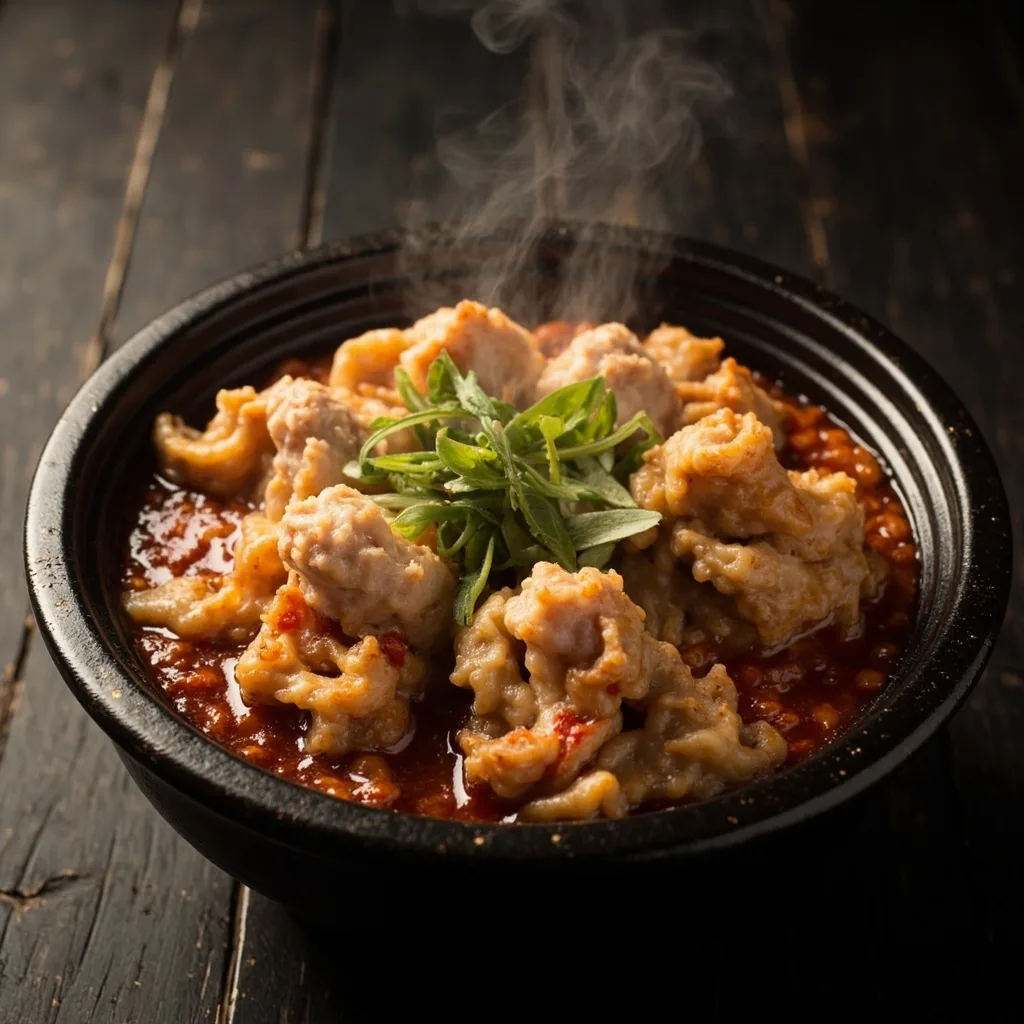
Ingredients
amomum fruit
75 g
dried chili peppers
20 g
star anise, chicken bouillon powder, and monosodium glutamate (each)
50 g
minced garlic
250 g
salt
90 g
granulated sugar
50 g
rendered pork lard
1 kg
cut garlic sprouts
500 g
mature ginger
300 g
scallions
200 g
cooking wine
400 g
seasoning dip
1
Instructions
1
Step 1
Blanch the pork marrow bones thoroughly in boiling water. Add 25 kg of water along with the mature ginger, scallions, and cooking wine. Bring to a boil over high heat for 9 minutes, then reduce to low heat and gently simmer until the broth turns milky white. Set aside.
2
Step 2
Soak the dried green beans in warm water, using enough to stand 2 times as high as the beans, for 12 hours. Change the water 3 times during soaking. Drain well, transfer the beans to a pressure cooker, add fresh water, and pressure-cook for 1 hour, until soft and creamy but not falling apart. Drain and set aside.
3
Step 3
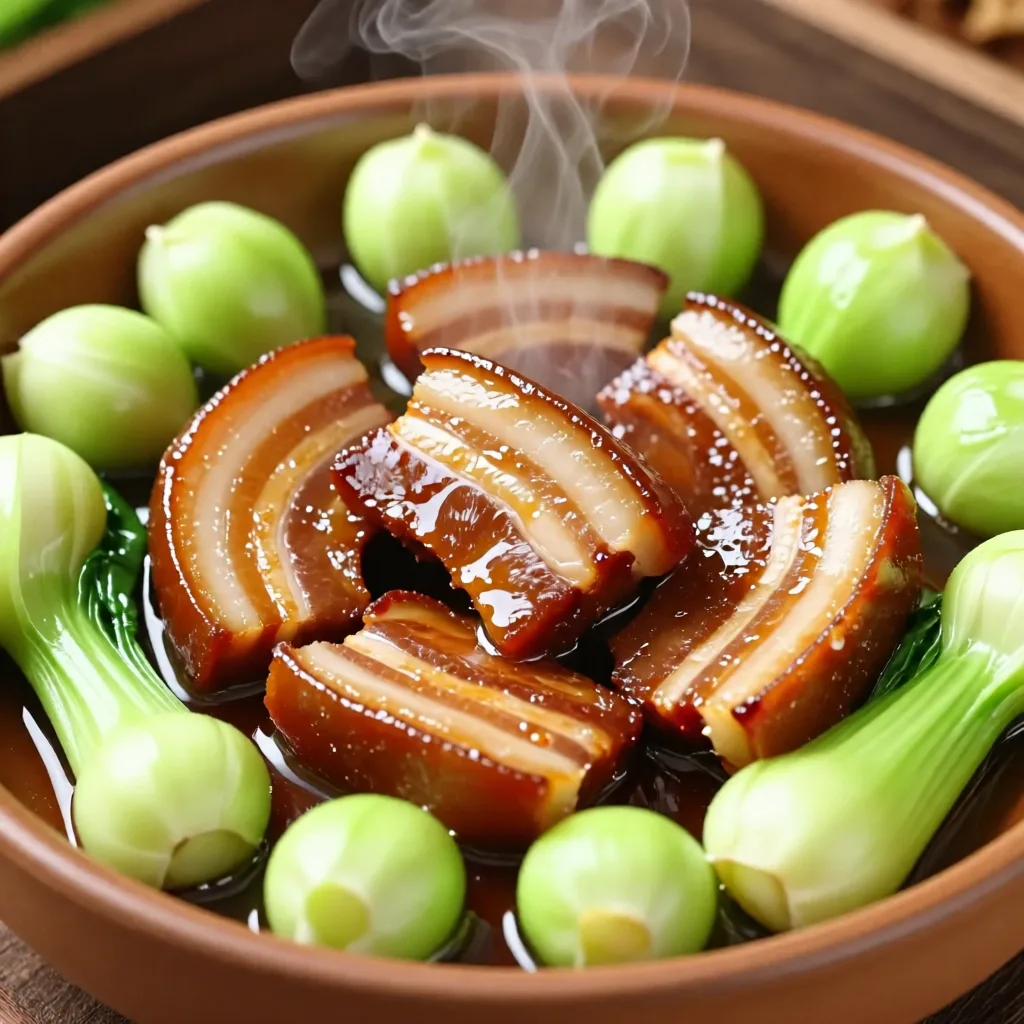
Cut the pork belly into strips about the thickness of a chopstick. Heat the lard to 40% heat and stir-fry the pork until golden brown, then drain and remove it.
4
Step 4
Heat the oil remaining in the wok. Add the star anise, amomum fruit, and dried chili peppers, and fry until fragrant. Add the minced garlic and fry until aromatic. Mash half of the beans as finely as possible, add the reserved broth, and season to taste. Stir in the remaining beans until evenly combined, then add sliced tomatoes and cut garlic sprouts. Add the fried pork just before serving.
Key point:
5
Step 5
Soak the green beans in clean water until they swell. Discard the soaking water and pressure-cook the beans with fresh water so they become creamy and tender without disintegrating.
6
Step 6
When preparing the broth, use high heat first, medium heat next, and low heat last. This progression gives the broth its milky-white color.
7
Step 7
When frying the pork, do not stir too often and do not use excessively high heat, or it may burn easily. If the heat is too low, however, the meat will not become crisp and tender.
8
Step 8
Failure point: Fry the spices over low heat to prevent them from tasting bitter.
9
Step 9
Broth does not turn white: When I first tested this recipe, I soaked the beans and then cooked them in their soaking water, afterward simmering that liquid into the stock. Despite this, the broth remained coffee-colored. The chefs in Guizhou produced a milky-white broth, and I wondered why. I later tried 3 times, halving the original liquid and adding water, but the broth turned red instead. On one occasion, an assistant accidentally discarded the bean-soaking water and substituted fresh water, and the broth became much lighter. I finally understood the process: change the soaking water 3 times to dilute the color as much as possible, then drain the beans thoroughly after cooking and retain only the beans. This produces a white broth. Green bean skins are red, so unless the water is changed during cooking, the broth will not turn white.
10
Step 10
Beans do not become tender: During testing, the green beans never became properly tender. I first simmered them gently for 3 hours, but half turned to puree while the rest remained whole. I then switched to pressure cooking. Although all the beans became mash, the hot pot broth became thin and watery near the end. In Guizhou, the bean broth remained thick with a slightly grainy texture throughout. I eventually fried half the beans until mashed and added the other half when serving. This has 2 benefits: first, diners can drink the broth immediately, and the mashed portion makes it taste rich and savory; second, the remaining beans become tender during cooking, so the broth stays rich without becoming excessively thick and remains filling. Once the broth is properly cooked and white, it does not need to be very thick because the fried beans naturally thicken it when the stock is added.
11
Step 11
Pork lacks aroma: While researching in Guizhou, I found that the crispy pork in the green bean hot pot was especially crisp and fragrant without being greasy. It had some of the flavor of cured meat but did not appear to be smoked, so I was unsure which cut had been used. During my first trial, I chose cured pork, but it completely altered the broth, left a large amount of oil floating on the surface, and became soft and shapeless. For my second trial, I used smoked pork. It was fragrant after frying, but simmering removed its meaty aroma. I eventually switched to pork belly, stir-frying it in a preheated wok until the fat rendered and the meat turned golden. This produces attractive crispy pork with a rich, non-greasy aroma.
Be careful not to add too much garlic. During my early trials, the broth became overwhelmingly garlicky. Use enough garlic to enhance the aroma without overpowering the other flavors.
12
Step 12
Seasoning dip does not suit local tastes: To accommodate the local palate, I adjusted the seasoning dip as well. This is not an ordinary oil dip or a so-called dry oil dip; it is made with dried and green chili peppers to provide heat without harshness and a fresh, fragrant flavor. For 10 portions, prepare it as follows:
- Remove the seeds from 40 g of green beauty peppers. Dry-roast them until the skins are crisp, add a pinch of oil, and stir-fry until fragrant. Drain and set aside. Fry 10 g of garlic in oil at 40% heat until golden, drain, and finely chop it together with the peppers. Remove the seeds from 15 g of dried chili peppers, dry-roast them over low heat until they develop a tiger-striped color, then cool and crush them finely by hand.
- Heat 50 g of rapeseed oil to 60% heat and pour it over the chopped peppers and garlic, stirring as you drizzle. Once the mixture smells fragrant, add 5 g of monosodium glutamate, 10 g of chili sauce, 1 g of pepper, 2 g of sugar, and 3 g each of spice powder and salt. Stir in 5 g of chopped cilantro.
Key point: Do not use excessive heat or too much oil when frying the green beauty peppers. Dry-roast the dried chili peppers without oil; oil prevents them from becoming crisp, reduces their aroma, and gives them an unattractive color.