Preserved Eggs
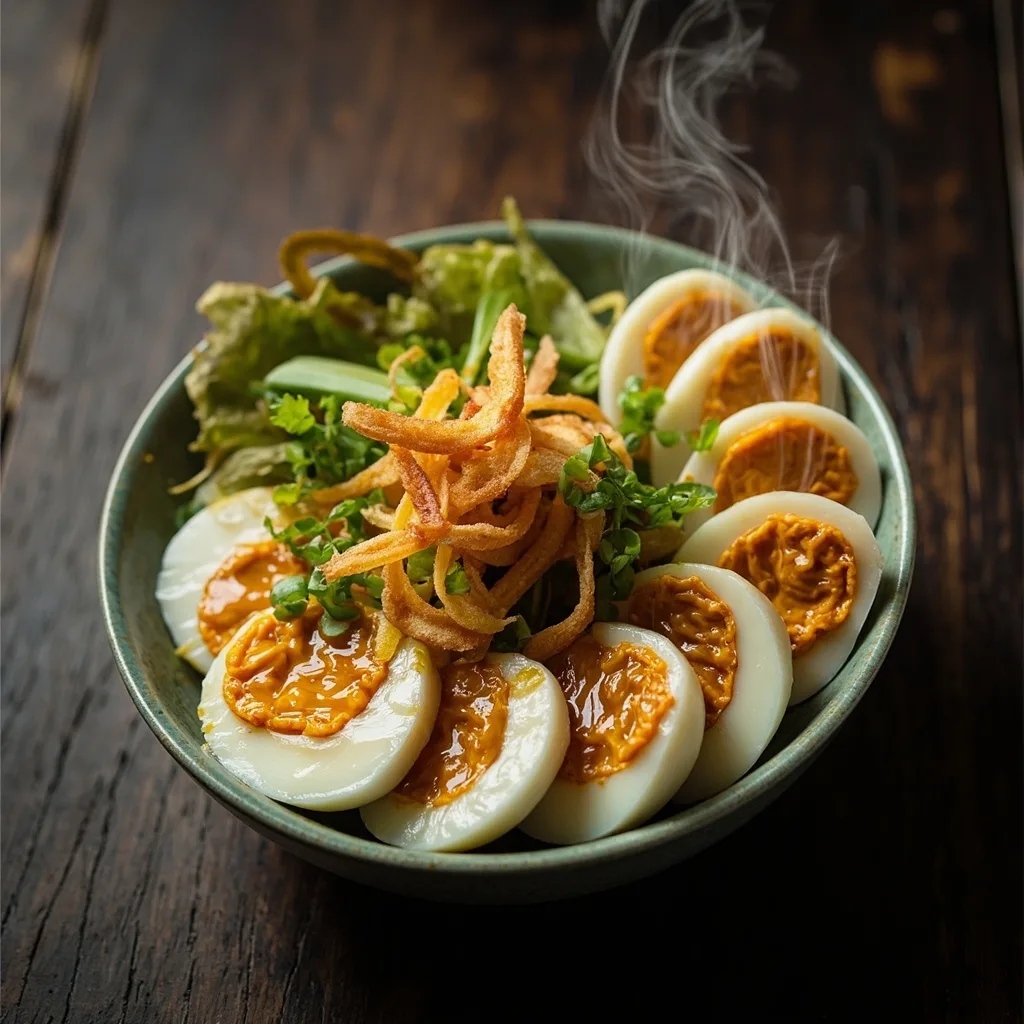
A method for curing preserved eggs (cǎi dàn) using ingredients such as soda ash, quicklime, salt, tea dust, and plant ash, featuring three recipes: lead-free sugar preserved eggs, lead-free pine-flower preserved eggs, and lead-free preserved eggs.
Ingredients
Soda ash
to taste
Quicklime
to taste
Salt
to taste
Tea leaves/tea dust (for brewing)
to taste
Yellow lead powder (traditional recipe use)
a small amount
Plant ash (sifted before use)
to taste
Instructions
1
Lead-Free Sweet Preserved Eggs Method
First bring 1 kg of water with red tea dust to a boil in a pot. Place tea leaves in a container with boiling water and slowly add quicklime. When the quicklime is about 80% dissolved, add soda ash and salt, then add the remaining quicklime and stir until fully dissolved. Remove the slag stones and rinse off any ingredients stuck to them with boiling water to recover them, then mix in the plant ash (the ash must be sifted clean). Stir until the material becomes clay-like and sticky, then pour it all onto a concrete floor to dry for 10-20 hours, letting it cool until it forms blocks for later use. Break up the mud blocks and stir until the mud becomes sticky enough to coat the eggs. Evenly coat each egg with the mud, then roll them in a basin of rice chaff. Place the eggs horizontally in a jar and store sealed. Do not move the jar during days 3-20 of sealing, as this can affect the egg white solidification.
2
Lead-Free Pine Pattern Preserved Eggs Method
Boil 5 kg of water with anise, Sichuan pepper, and pine needles in a pot for 30 minutes. Add tea dust and salt, simmer for 5 more minutes, then remove from heat. Add MSG and soda ash. Use the above broth to dissolve quicklime while stirring constantly and evenly. Add the mixture to plant ash and stir into a paste consistency. It should not be too thin; if too thick, add cold boiled water to thin. Use a wire skimmer to hold the eggs and dip them in the mud slurry, then coat with rice husks or bran (just one quick roll) and place into a jar for sealed storage. At temperatures above 30°C, the eggs mature in 7 days; at lower temperatures, the time extends accordingly.
3
Lead-Free Preserved Eggs Method
Take 1.5 kg of water and boil the tea dust into a tea juice, then strain it. Put the tea juice, salt, and soda ash into a basin, then gradually add quicklime. Once dissolved, mix thoroughly. Use a coarse sieve to sift the plant ash into the above liquid and stir into a paste consistency. Store and set aside for one day before use. Wash and dry the eggs, coat them with the paste, roll once in rice chaff to coat, then place into a jar for sealed storage. The eggs are ready to eat after about 15-30 days, with a shorter time in summer and slightly longer in winter.