
Brine Leaching Method
Describes two methods for leaching brine, along with a technique for testing brine concentration using lotus seeds.
Ingredients
sandy soil (sifted, cannot become salty)
to taste
grass ash (burned from grass)
to taste
sea water (for soaking ash or mud)
to taste
surface mud (scraped)
to taste
lotus seeds (weighing 3 fen)
to taste
Instructions
1
Plant Ash Brine Leaching Method
For sandy soil that cannot become salty after sifting, one must burn grass into ash, spread it on the drying ground, then soak it with sea water. Wait until it dries and turns white, sweep it and leach again.
2
Salty Mud Brine Leaching Method
For fine, moist soil that naturally contains salty essence, simply scrape the surface mud, carry it to the drying ground, still pour sea water on it, wait until it dries and becomes hard and solid, gather it and leach again. In summer use two days, in winter double that, then it becomes salty enough to use.
3
Making Brine
Take about 50 to 60 dan of dried salty mud, carry and pile it on high ground. Build a square-zhang pool, dig a well beside the trough, connect the openings with hidden pipes. Then pour sea water into the salty mud in the pool, so that the brine flows into the well opening.
4
Testing Brine
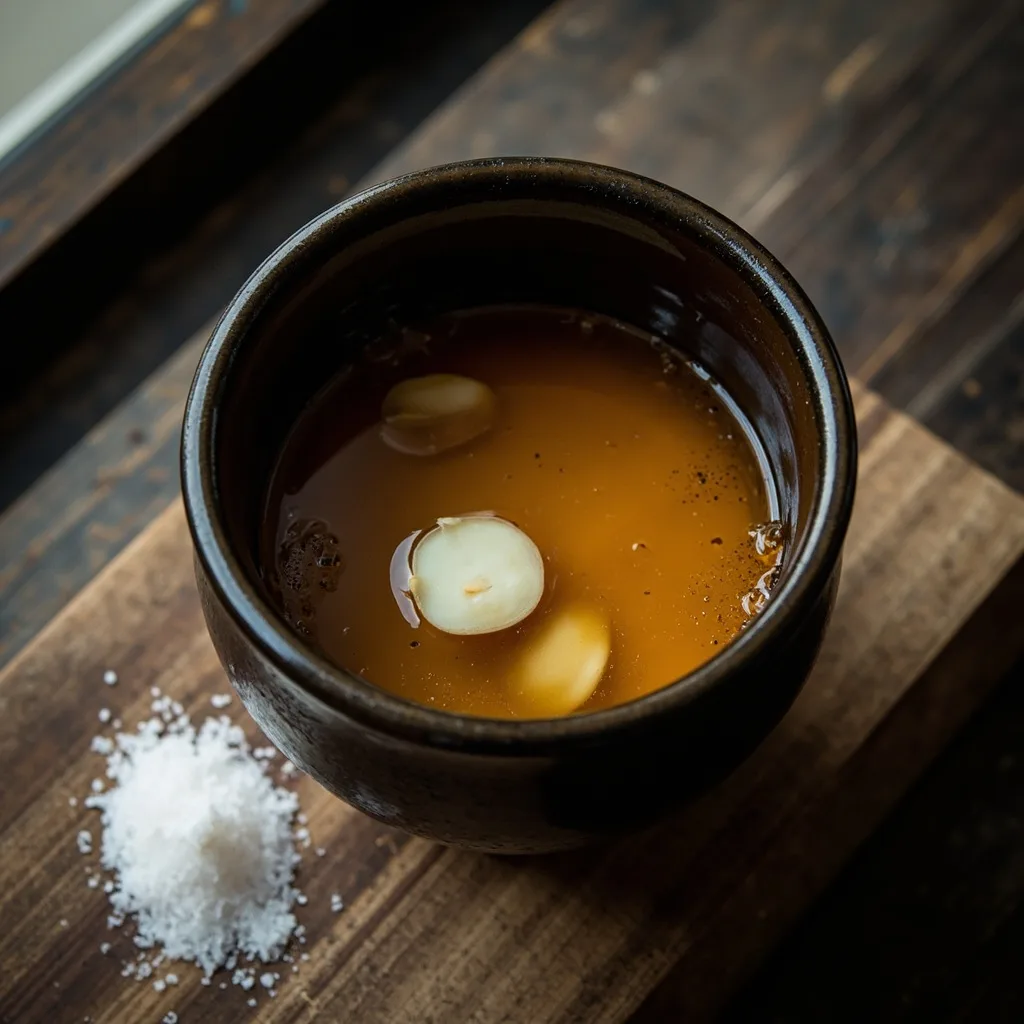
Test it with lotus seeds weighing 3 fen. First fill a small bamboo tube with brine and place a lotus seed in it; if it floats and lies horizontally, the brine is extremely salty and can be boiled. If it floats upright on the surface, it is slightly weak; if it sinks and does not rise, it is completely weak—in both cases, discard and do not use.