Homemade Salted Goose Eggs
There are essentially two ways to cure salted eggs: brine curing and dry salt curing. Brine curing is the traditional method and takes longer. Dry salt curing has gained popularity in recent years and works much faster. Which method is better is a matter of personal preference — I have tried both, and my family prefers the traditional approach.
Ingredients
goose eggs
15 pieces
chicken eggs
10 pieces
salt
1 pack
baijiu (Chinese white liquor)
100g
Instructions
1
Step 1
The goose eggs and chicken eggs are fresh eggs I got from my sister's house last month. They are free-range eggs raised by my family, completely organic ingredients. I pickled them immediately after returning home to prevent them from going stale after a long time. Rinse the goose eggs clean with a brush under running water, then air-dry naturally.
2
Step 2
Use the same method to wash the chicken eggs clean. I didn't originally plan to pickle chicken eggs, but seeing there was plenty of space left in the jar, I just put in 10 chicken eggs, which fit perfectly. Since chicken eggs are smaller, they can be eaten earlier.
3
Step 3
Pour 500g (1 Chinese jin) of salt into a pot. How much water should be added? Usually the ratio of salt to water is 1:4, but homemade pickles don't need to be that precise. Add an appropriate amount of water, just enough to submerge the eggs in the jar, then bring to a boil over high heat.
4
Step 4
Boil until all the salt is dissolved, then turn off the heat.
5
Step 5
I use a fermented bean curd jar to pickle the salted eggs. Rinse the jar clean with a brush in advance, drain off all water, let it air-dry naturally, then arrange the goose eggs inside.
6
Step 6
Place the chicken eggs on top. Let the boiled salt water cool to about 90°C, then pour it directly into the jar. This is the secret to tender salted goose eggs. After goose or chicken eggs are scalded with boiling water, the egg white is extra tender after pickling, and even after a few days, the egg white won't turn hard, with a particularly good texture. Give it a try, friends. Pour the boiled water into the jar until it just covers the eggs. After it cools, add the baijiu, cover the lid, and pickle for about 30 days. The chicken eggs will be ready to eat then, but the goose eggs need to be pickled for at least 40 days before eating.
7
Step 7
The pickled salted goose eggs and fresh chicken eggs can be boiled and eaten.
8
Step 8
Add an appropriate amount of water to a pot and boil the salted goose eggs. Actually, I started taste-testing the chicken eggs after 28 days, and the small chicken eggs were already fully pickled then. This is related to the indoor temperature: pickling is faster in summer, and slower in autumn and winter. Once the salted eggs are fully pickled, leaving them to pickle for a few more days will make the oil ooze out.
9
Step 9
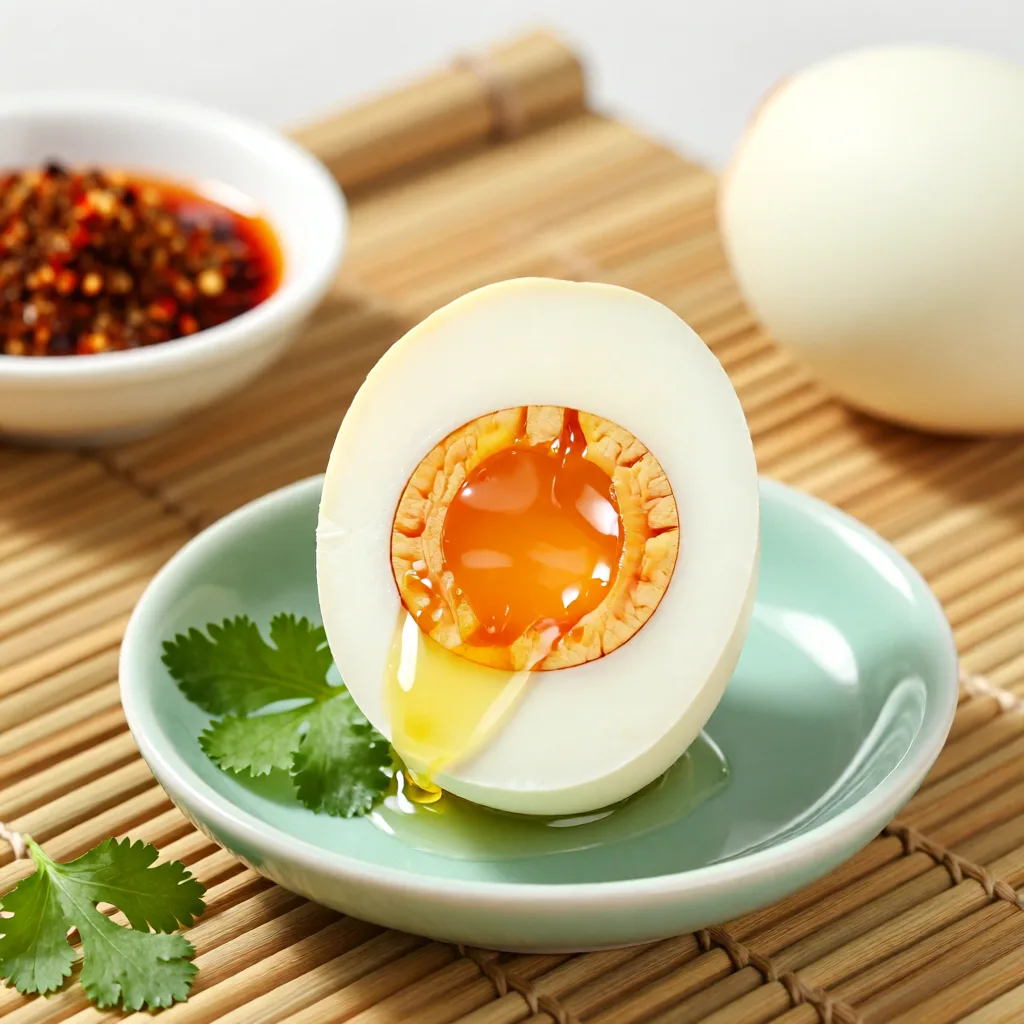
Cut the boiled salted goose eggs open and eat them with coarse corn porridge, it's absolutely delicious. Actually, my family rarely cuts them open to eat, we usually just eat one whole egg per person. I ate a lot of salted eggs this summer. In fact, the goose eggs also ooze oil, but we only cut them after they are completely cooled, so there doesn't seem to be as much oil.