Macau Roast Pork
Ingredients and preparation method for Macau-style roast pork.
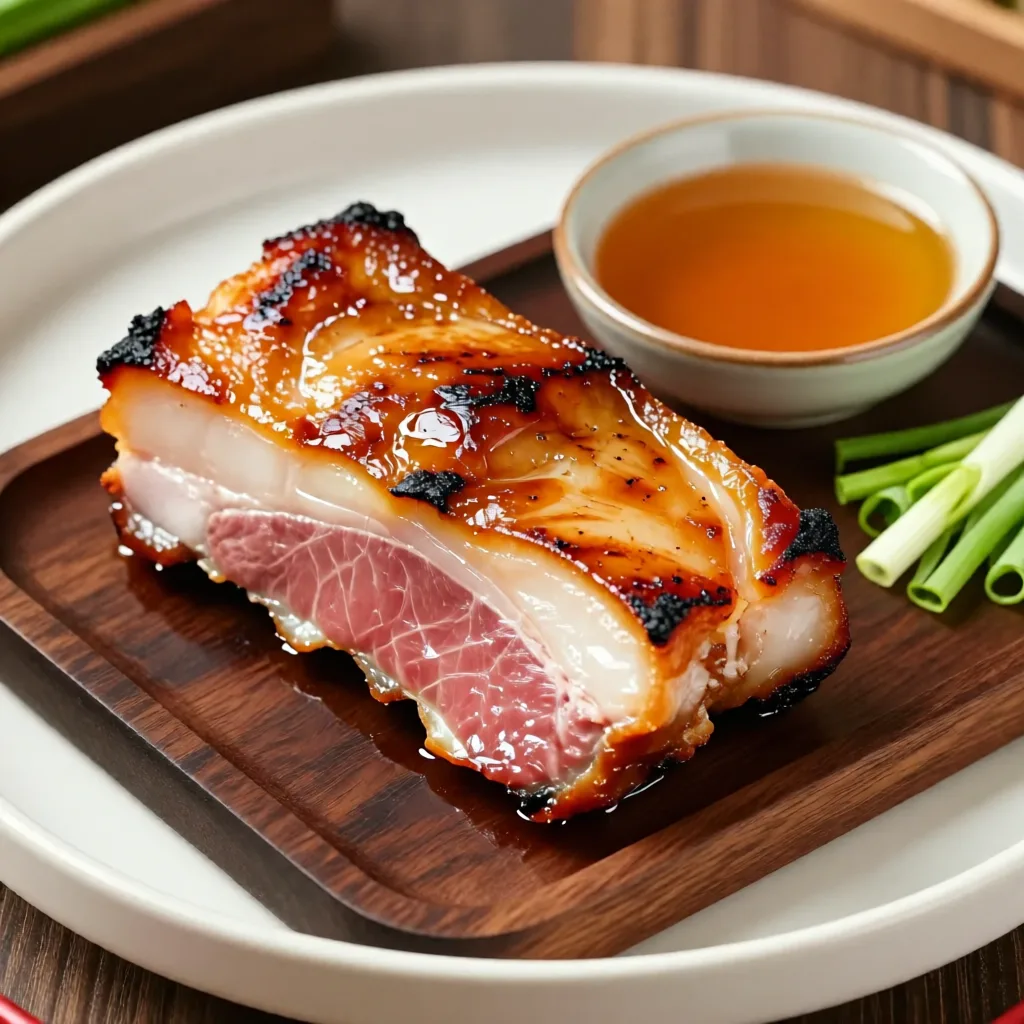
Ingredients
Pork belly with skin
2.5 kg
Roast goose seasoning
70 g
Fine salt
to taste
Baking powder
to taste
Roast pork needles
2
Stainless steel bucket (for boiling water)
1
Aluminum foil
to taste
Sugar
5 kg
Salt
10 kg
Monosodium glutamate (MSG)
500 g
Chicken bouillon powder
500 g
Sand ginger powder
450 g
Five-spice powder
250 g
Chicken sauce
250 g
Chu hou paste
250 g
Sesame paste
250 g
Peanut butter
250 g
Sesame oil
300 g
Fermented red tofu
150 g
Fermented tofu
250 g
Minced garlic
500 g
Cooking oil
400 g
Instructions
1
Step 1
Cut the selected pork belly into square blocks. Place in boiling water and simmer over low heat for 25–30 minutes, then remove and cool to room temperature.
2
Step 2
Use a pork skin pricker to pierce small holes in the skin. The punctures should be dense but not tear the skin, and should not be too deep.
3
Step 3
Mix the fine salt and baking powder (ratio of fine salt to baking powder is 1:10). Rub the mixed powder into the pork skin, massaging repeatedly until it feels warm — this process takes about 10 minutes.
4
Step 4
Let the rubbed pork belly marinate naturally for 10 minutes. After marinating, rinse the skin thoroughly with clean water.
5
Step 5
Make several cuts no deeper than 2 cm in the thickest parts of the meat. Evenly rub the roast goose seasoning onto one side of the pork so the flavors penetrate uniformly.
6
Step 6
Insert the roast pork needles along both diagonals of the roast to secure it firmly.
7
Step 7
Hook the roast with a roasting hook and hang it in a drafty spot to air-dry.
8
Step 8
Wrap the meat side and the edges with aluminum foil to prevent the meat from burning. Secure the foil at the corners with toothpicks.
9
Step 9
Fire up the oven on high heat. Place the roast in the oven with the skin facing the fire and sear the skin over high heat. After about 20 minutes, when the skin is burnt black, remove and let cool. Peel off the foil and remove the needles and hook.
10
Step 10
Scrape off the blackened outer skin with a knife to reveal the golden skin underneath. Trim away any uneven or burnt edges.
11
Step 11
When boiling the meat, never use high heat, or the meat will fall apart easily. During boiling, the skin must not face downward, or it will burn on the bottom (the skin contains abundant collagen that scorches easily on contact with the pot).
12
Step 12
When pricking the skin with the pork skin pricker, do not pierce too deeply — this will cause excessive loss of skin oils during roasting, preventing the crackling from staying crispy for long after cooking.