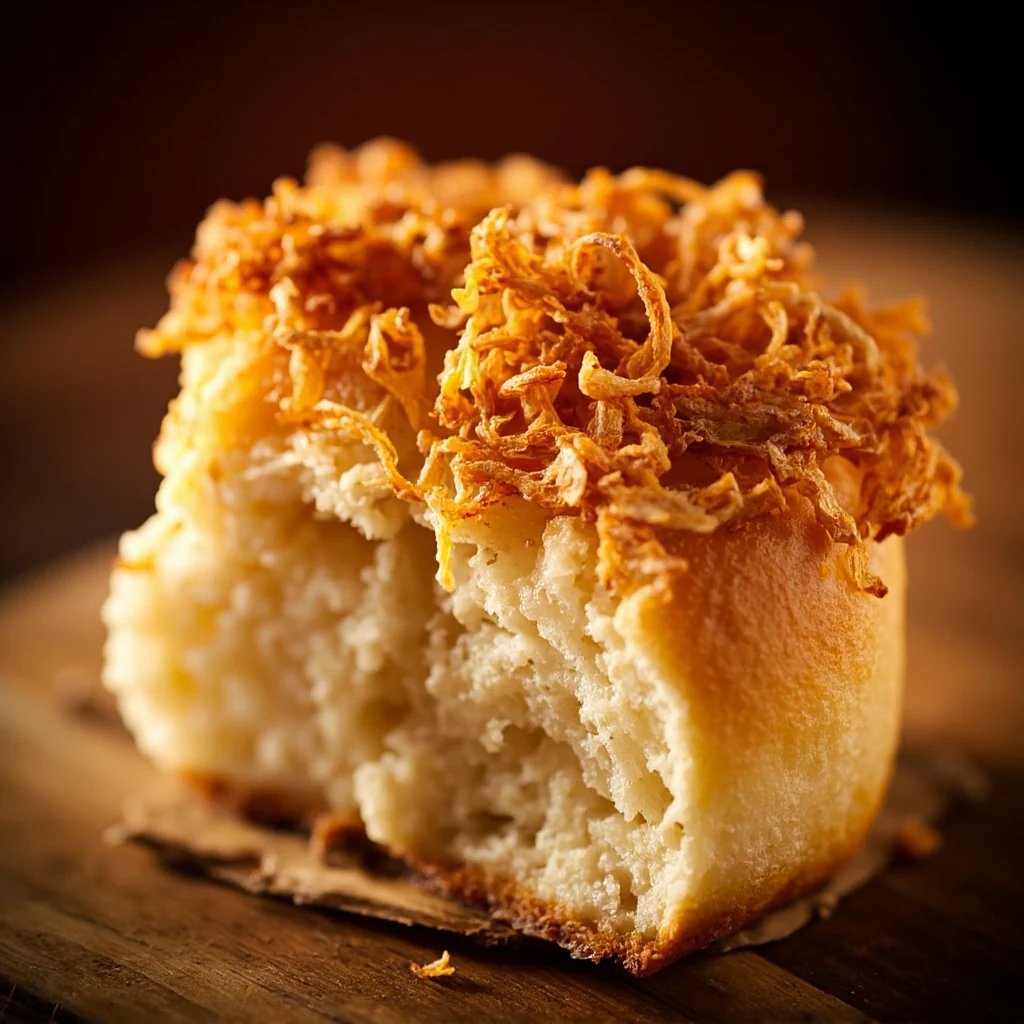
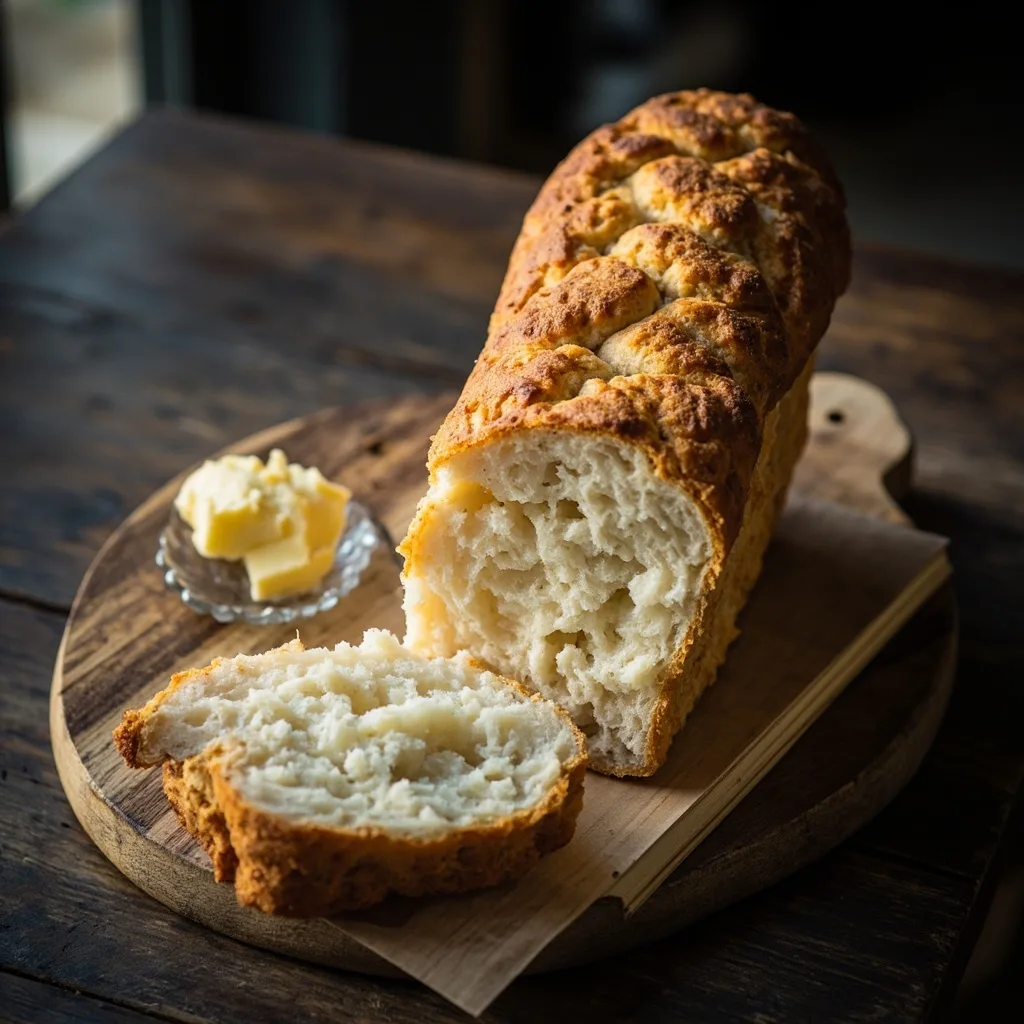
Mountain-Shaped Bread (Yamagata Loaf)
The perfect companion for breakfast and sandwiches, this mountain-shaped staple bread is made using a 1-nichi-kin mold.
Ingredients
Strong bread flour (extra strong flour)
250 g
Granulated sugar
13 g
Salt
5 g
Skim milk powder
5 g
Butter (room temperature)
5 g
Shortening
8 g
Fresh yeast (or 2 g instant dry yeast)
5 g
Water
175 ml
Beaten egg (for final surface coloring)
to taste
Dusting flour
to taste
Greasing fat (for the bowl)
to taste
Instructions
1
Mix the ingredients
Place the strong bread flour, granulated sugar, salt, and skim milk powder into a mixing bowl. In a separate bowl, mix the water and fresh yeast with a whisk. Pour the liquid into the dry ingredients and stir in a circular motion with your fingers. Once the dough comes together into a single mass, transfer it to the kneading surface and use a bench scraper to lift off any dough stuck to your hands and the bowl.
2
Knead the dough (about 15 minutes)
Hold the dough with both hands, stretching and tearing it against the kneading surface while working up and down. Continue kneading until the dough is uniformly firm throughout. Gather the dough with a bench scraper, slide your fingers under the dough, lift it up, flip it over, and slam it down onto the kneading surface. Combine the dough still clinging to your hands with the dough on the surface and fold them together. Change the angle of the dough from time to time and repeat the slamming motion for about 15 minutes.
3
Add the fats
After 15 minutes of kneading, the dough will become elastic and glossy. Once the gluten membrane has formed, flatten the dough out and place the butter and shortening in the center. Fold the four sides of the dough toward the center to enclose the butter and shortening.
4
Knead the dough (about 15 minutes)
Hold the dough with both hands, moving one hand up while the other moves down, and begin kneading on the work surface. Continue kneading until the dough has an even firmness throughout. Repeat the slamming, folding, and rotating motions for about 15 minutes until the dough forms a single, non-sticky mass. Confirm that the gluten membrane is transparent and does not tear.
5
First fermentation (28-30°C, about 90 minutes)
Grease a bowl, place the dough inside, and ferment at 28-30°C for 90 minutes, taking care to keep the dough from drying out. Fermentation is complete when an indentation made with a finger no longer springs back.
6
Flatten and degas
Dust the kneading surface with flour and turn out the dough. Dust your hands with flour and press the dough flat from the center outward, gently pressing out the trapped gas. Fold the dough in thirds from left to right, then fold it in thirds from top to bottom. Press the seams firmly with the palms of your hands to seal while degassing once more.
7
Second fermentation (28-30°C, about 40 minutes)
Flip the dough so the seam is facing down, grease the bowl, place the dough inside, and ferment at 28-30°C for 40 minutes. The fermented dough should be 1.5 to 2 times larger than the degassed dough.
8
Divide, round, and intermediate proof
Dust the kneading surface with flour and turn out the fermented dough. Weigh the dough on a kitchen scale and divide it into 2 equal pieces of 225 g each. Hold the top of each piece with both hands and, with a little force, roll and press the dough toward you from the opposite side. Rotate the dough 90° and repeat the rolling motion until the dough forms a round ball. Cover with plastic wrap and let rest for 20 minutes (intermediate proof).
9
Shape the loaves
Dust the kneading surface with flour and place the dough with the seam facing up. Press the dough flat with the palms of your hands. Roll the dough out with a rolling pin, first from the center to the top, then from the center to the bottom. Push out any trapped air bubbles that gather at the edges. Fold one-third of the dough toward the center and press flat, rotate 180°, fold the opposite third over and press flat. Press and seal the seam firmly with the heels of your hands. Stand the dough upright, slightly tuck the top edge inward to create a core, then continue rolling the dough from the core outward. Hold down the final seam with your hands and pinch it closed with your fingers.
10
Final proof (about 35°C, 60-70 minutes)
Grease a 1-pound (600 g) loaf pan. Place the two shaped dough pieces into the pan one at a time, with the seams facing inward and toward each other. Press both pieces snugly against the ends of the pan, keeping the surface taut and elastic. Let proof at about 35°C for 60-70 minutes, until the dough rises just slightly above the rim of the pan.
11
Bake (about 210°C, 30-35 minutes)
Brush the surface of the dough with beaten egg, set on a baking tray, and bake in an oven preheated to about 210°C for 30-35 minutes. As soon as baking is finished, remove the bread from the pan and place it on a wire rack to cool.