Pain de campagne (Country bread)
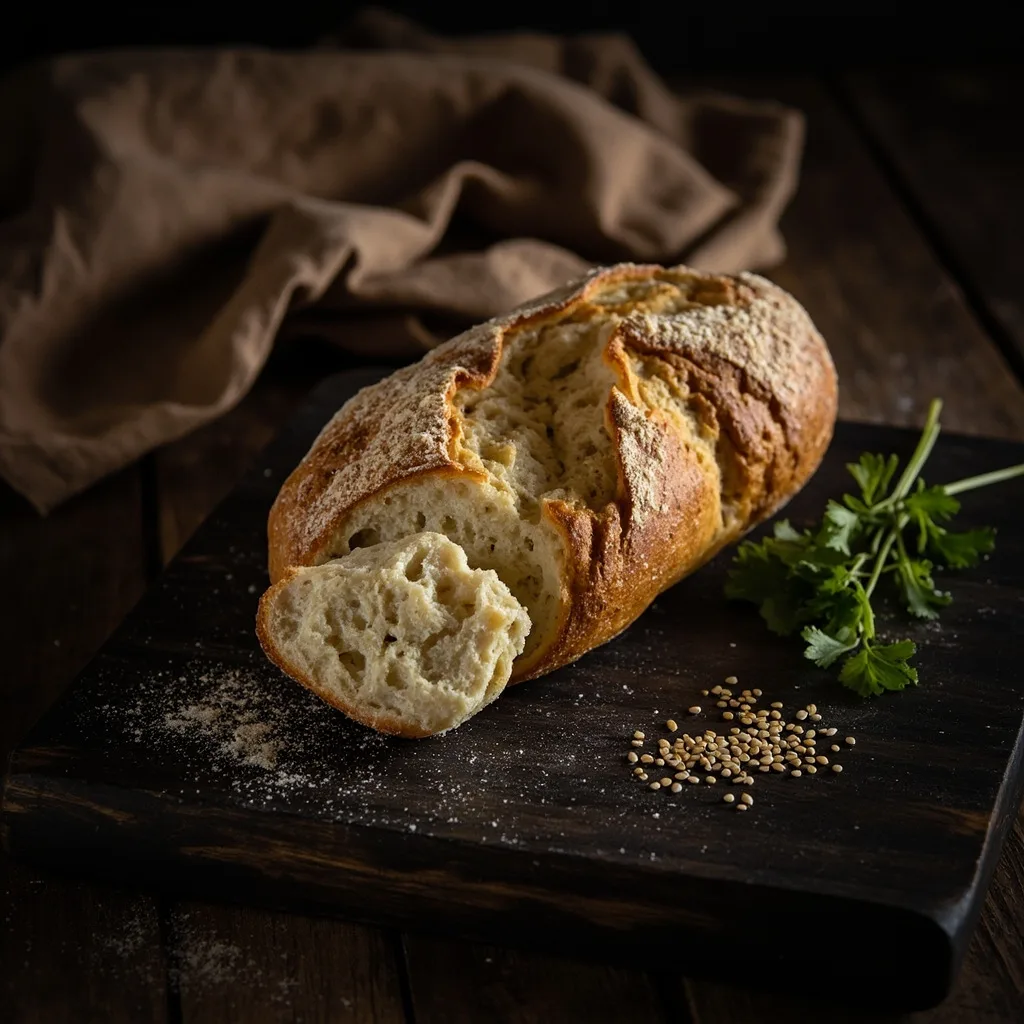
An essential bread for French fishermen at sea—long-lasting with a crisp crust and tender crumb that pairs well with any ingredient.

Ingredients
Bread flour
1000 g
Caster sugar
30 g
Salt
15 g
Instant yeast
15 g
Skim milk powder
30 g
Water
735 g
Cultured butter (softened to room temperature before use)
30 g
Instructions
1
Mixing
Combine all ingredients except the butter in a stand mixer. After mixing on low speed for about 2–3 minutes, pause and scrape down any dough clinging to the inside of the bowl. First, mix the sugar, salt, and flour together. Then add the milk powder and instant yeast to the flour in sequence, stir by hand, and add the water. After roughly combining the ingredients, pause the mixer again and use a dough scraper to scrape the dough off the inside of the bowl—do not leave any unmixed flour behind. Mix on high speed for 2–3 minutes.
2
Adding the butter
When the dough reaches about 70–80% development, add the cultured butter. First, work the butter into the dough by hand, then continue mixing with the machine. Mix on low speed for 1 minute, then switch to high speed and mix for about 1 minute. Stretch a small piece of the moist dough and check whether you can pull it thin enough to see your fingers through (windowpane). Once the dough comes together, the bottom of the bowl will be visible and the dough will develop a sheen.
3
First fermentation
Place the dough in a shallow tray and proof in a proofing box for 30 minutes. Proofing box: 28 °C, 80% humidity.
4
Dividing
Dust the work surface and the proofed dough with flour. Invert the tray to drop the dough out, smooth side down, onto the work surface. Divide the dough into 200 g pieces. When dividing, use as few cuts as possible to avoid tearing the dough. When weighing, stack the small pieces used to make up the correct weight on top.
5
Rounding
Roll each piece of dough outward from the center, then press out the air with your hand. Flip the dough over, roll it up once more, and press out the air again. When dividing, tuck the small adjustment pieces into the center while rounding. Keep a little thickness in the center of the dough. Flip the dough over again and roll it up from the center outward. After rolling, cup the dough in your hands and round it into a tight ball.
6
Bench rest
Place the dough seam-side down in a shallow tray and proof in the proofing box for 15–20 minutes.
7
Shaping
Remove the dough from the proofing box and place seam-side up on a floured work surface. Roll the dough up from the center outward and set it seam-side down. Pat the dough with the palm of your hand to release the air inside. Flip the dough over, place it seam-side up and lengthwise on the work surface, and pat it with your hands to expel the air. Then fold the side closest to you inward from the center, and fold the other side inward over it to make three layers. Press the folded edge firmly to seal. Press the three-layered dough flat with your hands to release the air. Then roll the dough inward, thoroughly expelling any air. While rotating the dough, shape it into a spindle (oblong) with a rounded center and tapered ends.
8
Second fermentation
Dust a couche (linen cloth) with flour, lay the dough on top, and pleat the cloth up around it. Place the whole thing in the proofing box for 30 minutes for the second fermentation. When the second fermentation is complete, remove the dough from the proofing box. While folding the dough inward with your thumbs, press firmly with the heel of your hand. Be careful not to trap air or excess flour inside the dough. Finally, press the dough firmly closed. Use the small fingers of both hands, pressing inward, to force the dough toward the center. The dough should have expanded about 20% from its pre-fermentation volume.
9
Baking
Place the dough seam-side down on a baking tray and dust the top with flour. Score the surface with a blade. When scoring, bend the blade to follow the curve of the dough so it cuts cleanly through the surface, keeping the curve of the blade consistent with the curve of the score. Place the dough in a preheated oven. Spray steam once just before loading and once just after. Bake for 15 minutes at 250 °C top heat / 220 °C bottom heat.