Sacher Cake
Classic Austrian Viennese chocolate cake, coated in apricot jam and chocolate glaze for a smooth, glossy finish and distinctive texture.
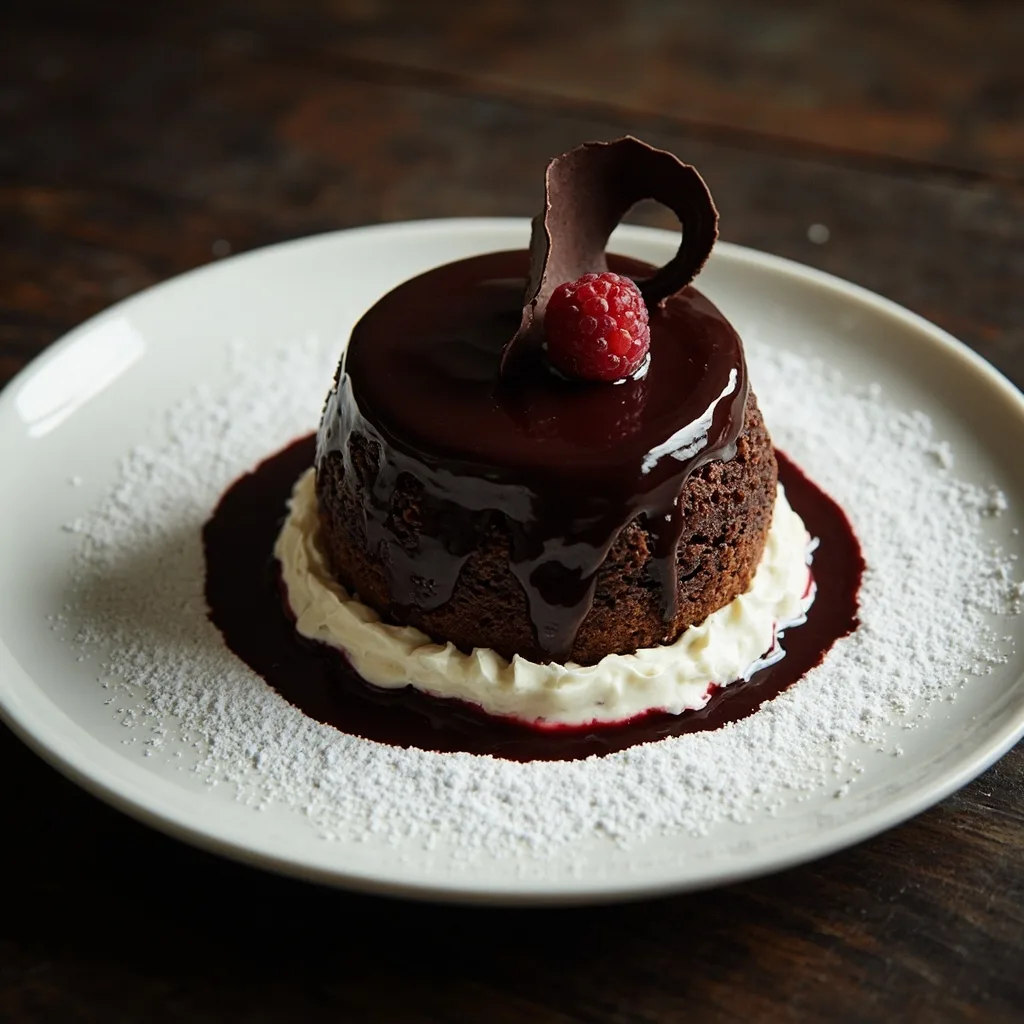
Ingredients
Sweet chocolate (softened at room temperature)
70 g
Butter (unsalted butter, softened at room temperature)
60 g
Granulated sugar (for basic batter)
35 g
Egg yolks (M size)
3
Egg whites (for meringue)
3
Salt (for meringue)
a pinch
Granulated sugar (for meringue, added in 4 portions)
65 g
Cake flour (sifted, set aside)
60 g
Apricot jam (for coating)
200 g
Water (for apricot jam coating)
30 g
Lemon juice (for apricot jam coating)
10 g
Water (for chocolate glaze)
75 g
Sweet chocolate (for chocolate glaze, chopped)
150 g
Granulated sugar (for chocolate glaze, added in 5 portions)
180 g
Instructions
1
Melt the Chocolate
Melt the chocolate over a bain-marie to 35~37°C, stirring with a rubber spatula to help it melt. Once melted, remove from the hot water and set aside.
2
Whip the Butter
Place the butter in a bowl and beat with a handheld mixer, then add the granulated sugar and continue beating. The butter is ready when it turns white from incorporating a lot of air.
3
Combine the Chocolate and Butter
Add the chocolate (step 1) to the whipped butter (step 2) and beat with a handheld mixer until evenly combined.
4
Add the Egg Yolks
Add one egg yolk at a time, mixing thoroughly after each addition. Once everything is combined, use a rubber spatula to fold the mixture evenly.
5
Whip the Egg Whites
Add the salt to the egg whites and beat at low speed with a handheld mixer to break them up. Once they become watery, switch to high speed and whip to a foam.
6
Beat to Stiff Peaks
Whip the egg whites until they can pull up stiff, upright peaks.
7
Add the Sugar in Portions
Continue whipping, adding the granulated sugar in 4 portions.
8
Whip to Soft Peaks
Whip the egg whites until they can pull up soft peaks. Remove the whisk and stir manually to even out the size of the bubbles throughout the meringue.
9
First Fold
Add half of the meringue to the batter and fold with a rubber spatula. When the mixture shows a marbled pattern, add half of the cake flour and fold by scraping up from the bottom of the bowl to combine evenly.
10
Rewhip the Meringue
Rewhip the remaining meringue to even out the size of the bubbles.
11
Finish the Batter
Pour in all the remaining meringue and fold with a rubber spatula until marbled. Then add the remaining cake flour and fold until the batter is completely smooth with no traces of flour.
12
Pour into the Mold
Place a round bottomless mold on a baking sheet and pour in the batter. Use a rubber spatula to spread the batter up the sides of the mold, creating a depression in the center.
13
Bake
Bake in an oven preheated to 180~190°C for 40~50 minutes. Once baked, place on a wire rack to cool. The cake is done when the surface is dry with cracks, and pressing gently with a finger gives a slight bounce.
14
Unmold and Trim
Peel the paper off the bottom of the cake. Use a small western-style knife to trim off the cake that overflowed the mold. Then insert the knife along the inside of the mold and cut around to release the cake. Finally, use a serrated knife to level the top surface.
15
Prepare the Base
Place the cake on a 15 cm round thick cardboard base. On a tray, set a base smaller than the Sacher cake, then place the cake with its cardboard on top.
16
Cook the Apricot Jam
Combine the apricot jam, water, and lemon juice in a saucepan. Heat and bring to a boil while simmering.
17
Check the Consistency
Spoon a small amount onto the tray to check the thickness. It is done when the drops hold their shape and the edges appear slightly raised.
18
Apply the Apricot Jam
Once the jam reaches the right consistency, pour it all at once over the cake. Use a palette knife with large sweeping motions to quickly spread the jam, coating the sides as well.
19
Complete the Jam Coating
Use the jam that dripped onto the tray to cover any missed spots, quickly coating the entire cake. Let it cool until touching with a finger no longer leaves jam behind.
20
Melt the Chocolate
Pour the water into a saucepan, bring to a boil, then remove from heat. Add the chocolate and stir with a wooden spoon until melted.
21
Bring Back to a Boil
Once the chocolate is melted, return the saucepan to the heat and bring to a boil again, stirring with a wooden spoon.
22
Add the Sugar in Portions
Add the granulated sugar in 5 portions while maintaining a gentle boil.
23
Cook to 107~108°C
Cook the chocolate, monitoring with a thermometer, until it reaches 107~108°C.
24
Cool Down
Remove from heat and let the saucepan sit briefly until the boiling subsides.
25
Test the Texture
Spoon 2 tablespoons onto a cutting board and brush it back and forth with a palette knife, doing 5 strokes total.
26
Stir Until Thick
Once the chocolate glaze thickens, scrape it off the cutting board and return it to the saucepan. Repeat the same action 2~3 times.
27
Finish the Glaze
The chocolate glaze is done when it becomes thick enough that stirring with a wooden spoon leaves a film on the surface.
28
Pour the Chocolate Glaze
Pour the chocolate glaze all at once over the cooled cake. Use a palette knife with large sweeping motions to quickly coat the top and sides of the cake. Do not smooth more than 2 times.
29
Coat the Sides
For any sides of the cake not covered by the glaze, scoop up the glaze that dripped onto the tray and spread it to fully cover. Work quickly.
30
Set and Finish
Carefully trim off the chocolate glaze that drips from the cake with a palette knife, then let it set at room temperature (10~15 minutes) until solidified.