Sea Egg Family Reunion
A rich and comforting stew featuring a savory steamed duck egg loaf as the centerpiece, surrounded by an assortment of seafood, meats, and vegetables in a fragrant pork bone broth.
Story
This hearty one-pot meal brings together a variety of textures and flavors, from the tender, savory slices of the stuffed duck egg loaf to the springy fish balls and succulent shrimp. Simmered gently in a robust stock made with pork bones and dried cuttlefish, the dish fills the kitchen with a warm, inviting aroma, making it a perfect centerpiece for a shared family table.
Ingredients
Duck eggs
6
Fatty pork
100g
Water chestnuts
80g
Pork bones
1000g
Dried cuttlefish
200g
Meatballs
to taste
Cuttlefish
to taste
Fish balls
to taste
Fish skin dumplings
to taste
Ham
to taste
Fresh shrimp
to taste
Pork skin
to taste
Chinese cabbage hearts
to taste
Dried shiitake mushrooms
to taste
Sliced bamboo shoots
to taste
Quail eggs
to taste
Black wood ear
8g
Shiitake mushrooms
8g
Glass noodles
30g
Salt
to taste
Chicken powder
to taste
Ginger
25g
White pepper
whole 10g
Yellow wine
50ml
Instructions
1
Step 1
Sea Egg ingredients: 6 duck eggs, 100g fatty pork, 80g water chestnuts, 8g black wood fungus, 8g shiitake mushrooms, 30g vermicelli, salt, appropriate amount of chicken powder. Sea Egg preparation: Soak black wood fungus and shiitake mushrooms, then shred them; soak vermicelli; beat duck eggs until evenly mixed, adding a little salt; shred fatty pork; shred water chestnuts.
2
Step 2
Sea Egg stir-frying: 1. Put fatty pork shreds into a wok; 2. Stir-fry over medium heat for half a minute until slightly oiled; 3. Add shiitake mushrooms, continue stir-frying for half a minute; 4. Add wood fungus shreds and water chestnut shreds, stir-fry for 1 minute; 5. Add vermicelli and stir-fry for half a minute, adding a little salt and chicken powder at the same time; 6. Turn off heat, transfer to a plate, and let cool for later use. Tip: Do not over-stir-fry the fatty pork; just until slightly oiled is enough, absolutely do not fry it into cracklings; after adding vermicelli, it may stick slightly to the pan, this is normal, just stir-fry faster, absolutely do not add water at this time.
3
Step 3
Sea Egg making: 1. Prepare a square heat-resistant bowl and grease the bottom and inner walls with a layer of vegetable oil; pour in half of the egg mixture; 2. Pour the cooked and cooled main ingredients evenly in; 3. Pour the remaining half of the egg mixture over the main ingredients; 4. The egg mixture must completely soak and cover the main ingredients; if the egg mixture cannot cover the main ingredients, remove excess main ingredients; 5. Place in a steamer, steam over high heat for 20 minutes until the egg mixture is completely set, then turn off heat; 6. Use a small knife to score along the four inner walls of the bowl to the bottom to release the egg from the wall, then slice the Sea Egg for later use.
4
Step 4
Tip: Greasing the bowl wall is to make it easy to pour out after steaming; do not slice the steamed Sea Egg too thin, as it is easy to cook and break if too thin. It is better to have fewer stir-fried ingredients rather than too many; the egg mixture should be more than the stir-fried ingredients. If the egg mixture cannot completely wrap and penetrate the stir-fried ingredients, it may cause the center to lose shape. After all, the duck egg mixture is the 'binder' for shaping.
5
Step 5
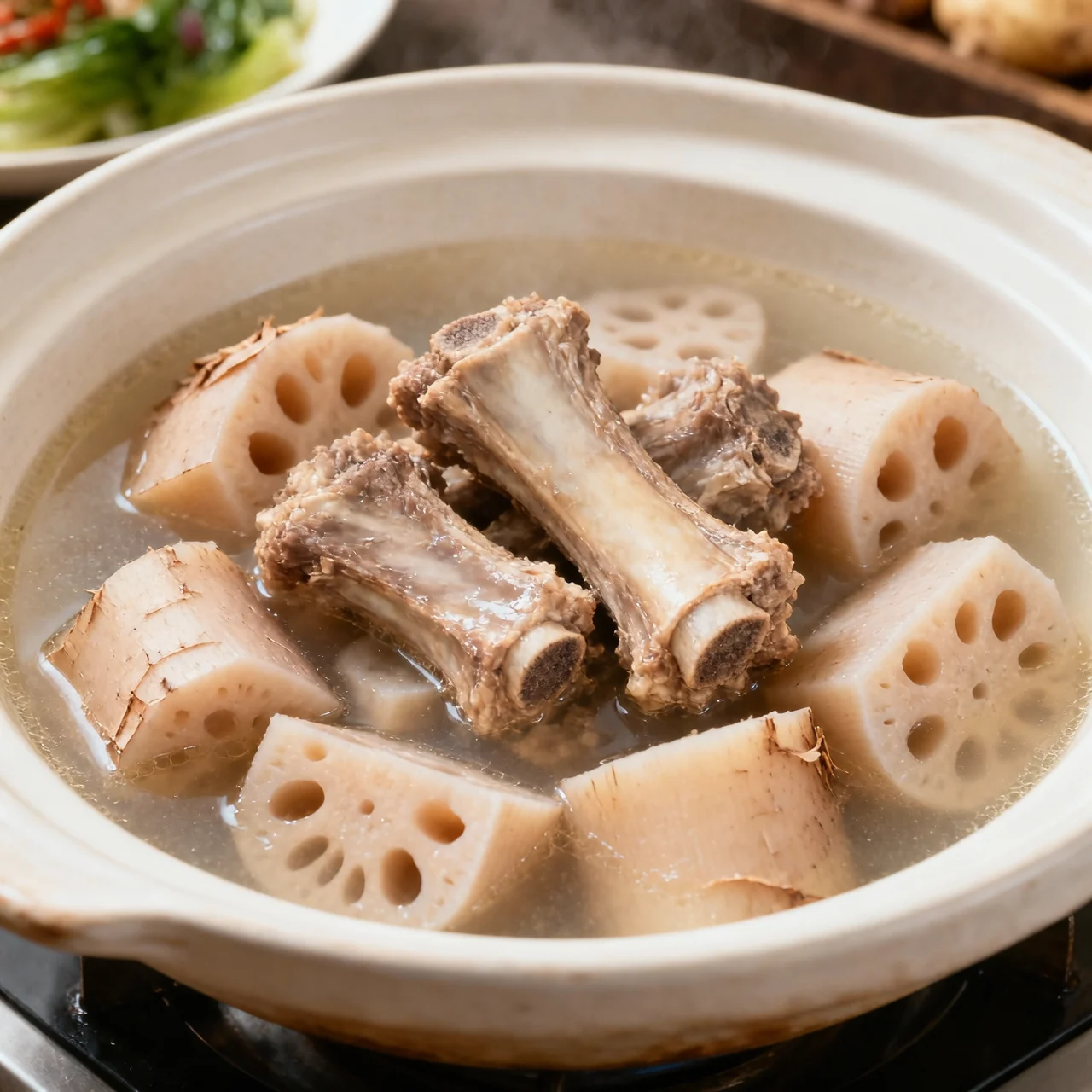
Prepare soup base ingredients: 1000g pork bones, 200g dried squid, 25g ginger, 10g whole white peppercorns, 50ml yellow wine.
6
Step 6
Ingredient preparation: Wash pork ribs, no need to blanch; dried squid needs to be soaked in warm water and 30g edible alkali for more than 5 hours in advance, remove bones and skin then cut into large diagonal slices; Stewing: Put the above ingredients together into a pressure cooker, add water to cover the ingredients. Bring to high heat until steaming, then change to medium-low heat and continue to stew for 20 minutes.
7
Step 7
Family Reunion plating: Meatballs, fish balls, fish skin dumplings, ham meat, squid, winter mushrooms, winter bamboo shoot slices, quail eggs, fresh shrimp, pork skin, cabbage heart buds.
8
Step 8
- Place cabbage heart buds at the bottom and around the sides; Tip: Placing vegetables like cabbage and soybean sprouts at the bottom and around the sides can effectively prevent the main ingredients from sticking to the pot during the cooking process.
9
Step 9
- Put the selected other ingredients into the clay pot in order; Tip: Quail eggs need to be boiled and peeled (after the eggs are cooked, pour out the hot water, shake vigorously in the pot to make them collide and crack the shells, then soak in cold water for a moment, so the shells won't stick when peeling); pork skin needs to be soaked and cut into diagonal slices, fresh shrimp needs to be stir-fried cooked with ginger and garlic over oil, bamboo shoot slices blanched in salt water to remove astringency, squid slices need to be taken out from the base soup pot;
10
Step 10
- Place the sliced Sea Egg in the very center and pour in the stock. Tip: The stock does not necessarily have to cover the ingredients; filling to 80% of the pot height is fine. Because during the cooking process, cabbage and others will release water, which can easily cause spillover.
11
Step 11
- Place the sliced Sea Egg in the very center and pour in the stock. Tip: The stock does not necessarily have to cover the ingredients; filling to 80% of the pot height is fine. Because during the cooking process, cabbage and others will release water, which can easily cause spillover.
12
Step 12
- Place the clay pot on the stove, cover and bring to a boil over high heat, then change to low heat and simmer for another 20 minutes, add appropriate amount of salt, turn off heat. Rich fragrance overflowing, a feast of vision and taste is being freely displayed! Tip: When starting on high heat, you must stay by the side to prevent the soup from overflowing when boiling; be sure to switch to low heat before it overflows. Otherwise, what overflows is the rich and fragrant juice from the upper layer.