Chives and Fennel Dual-Filling Dumplings
My family loves dumplings — we eat them every ten days to two weeks. Whenever we return from traveling or a business trip, the first meal is always noodles or dumplings. In the eyes of southerners, dumplings seem to be just a snack or small bite, but for us northerners they are a proper main course with vegetables and meat. We eat dumplings when we're happy, and we eat them when we're not (because they always lift our mood). We eat them at festivals too. You could say dumplings are an indispensable staple for northerners.
Vegetables from all four seasons can be used as dumpling filling, and although there are many varieties, a typical meal only features one kind. In the past, when the priority was simply having enough to eat, this was perfectly fine, but in today's era of growing attention to balanced nutrition, it feels a bit outdated.
Usually, when we eat rice or steamed buns, we stir-fry several dishes to take in enough nutrients. By the same logic, eating dumplings with only one filling creates a nutritional gap. Even though dumplings may contain several ingredients, it is still rather one-dimensional compared with a rice-and-dishes meal. Even the most delicious dumplings grow bland after a while. In my family, we always make two fillings in one pot — no squabbling, pick whichever you like, and it has never disappointed us. You can eat until you are stuffed, and it never feels greasy.
Ingredients
ground pork
600 g
chives
1 handful
fennel
1 handful
flour
800 g
cold water (for flour)
480 g
soy sauce
30 g
light soy sauce
20 g
salt
to taste
cold water (for filling)
to taste
Instructions
1
Step 1
Place the flour and water into the bread pan, install the bread pan into the Donlim JD08 bread machine, and start the "kneading" program 1 for 10 minutes; my bread machine has relatively high power and can knead up to 800 g of flour at once, which is just enough for dinner for my family of four plus breakfast the next day.
2
Step 2
Once the dough comes together with no dry flour remaining, leave it in the bread pan, cover with the inner and outer lids, and let it rest for about 30 minutes before using; it will become moist and soft.
3
Step 3
Place the ground pork in a bowl first, thoroughly mix the soy sauce, light soy sauce, and salt with the meat until well combined, then divide the mixture into two portions. For the chive filling you can add a bit more water to make a thick paste; fennel stems contain quite a bit of juice, so the meat for fennel can have less water added. Because we want to highlight the green color of both vegetables, the soy sauce should not be added too much to avoid making the color too dark and spoiling the bright green of the greens.
4
Step 4
Pick over the chives and fennel to remove any old or yellow leaves, soak them in lightly salted water for a few minutes, then rinse thoroughly with clean water and shake off the water trapped between the leaves.
5
Step 5
Trim about 5 mm off the root ends of the chives and fennel separately to remove any dust or grit that's hard to wash away, then finely chop them and add each to its respective meat filling.
6
Step 6
Don't rush to mix the vegetables into the meat filling; instead, stir them together just before wrapping the dumplings to prevent the salt in the meat from drawing out juices from the vegetables and causing nutrient loss.
7
Step 7
Take the rested dough out and place it on a work surface, sprinkle with some flour, roll it into a long thin rope, cut into evenly sized pieces, and roll each into a round wrapper that's slightly thin at the edges and a bit thicker in the middle.
8
Step 8
Place an appropriate amount of filling onto the round wrapper, and fold, pinch, or squeeze the dumplings into shape using your own technique.
9
Step 9
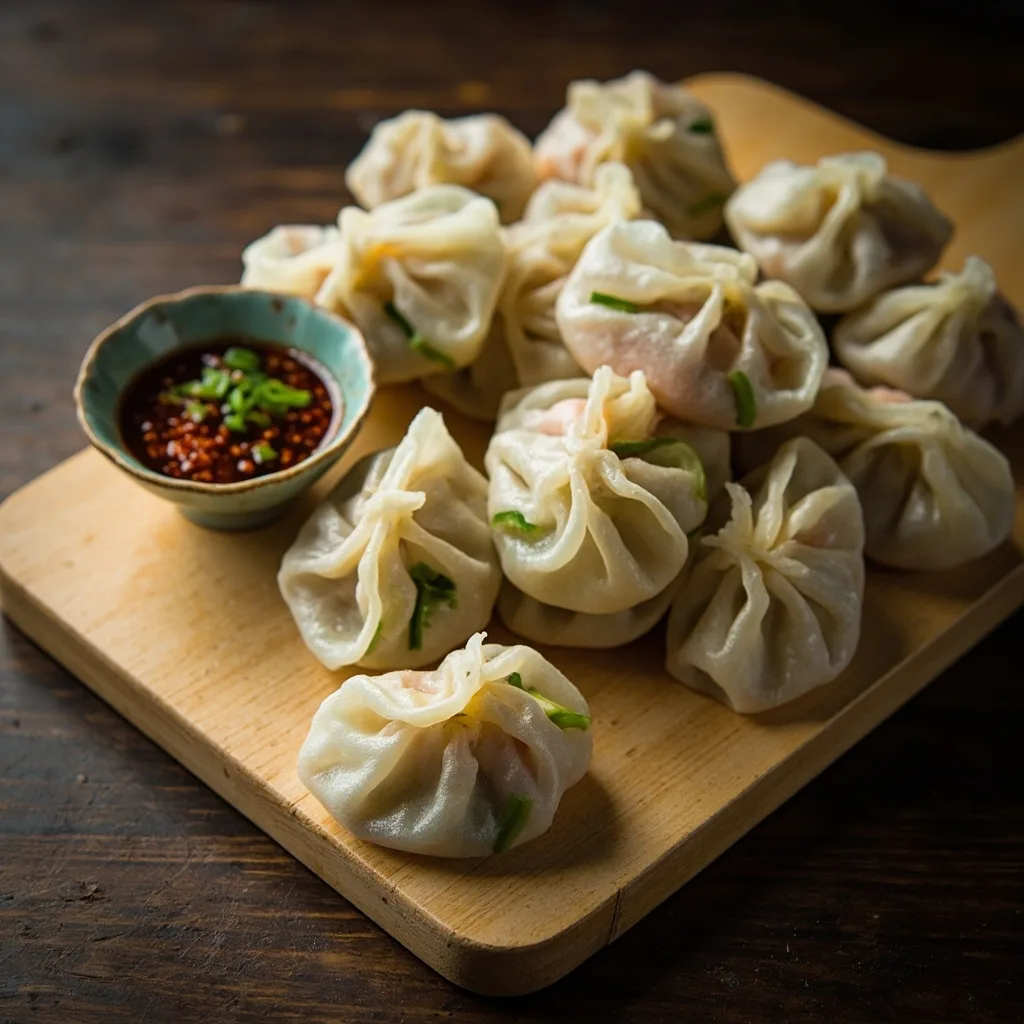
Since the wrappers are all the same color, the two fillings can be distinguished by using different folding methods or by pinching decorative edges; can you guess what filling is inside the lace-edged dumpling?
10
Step 10
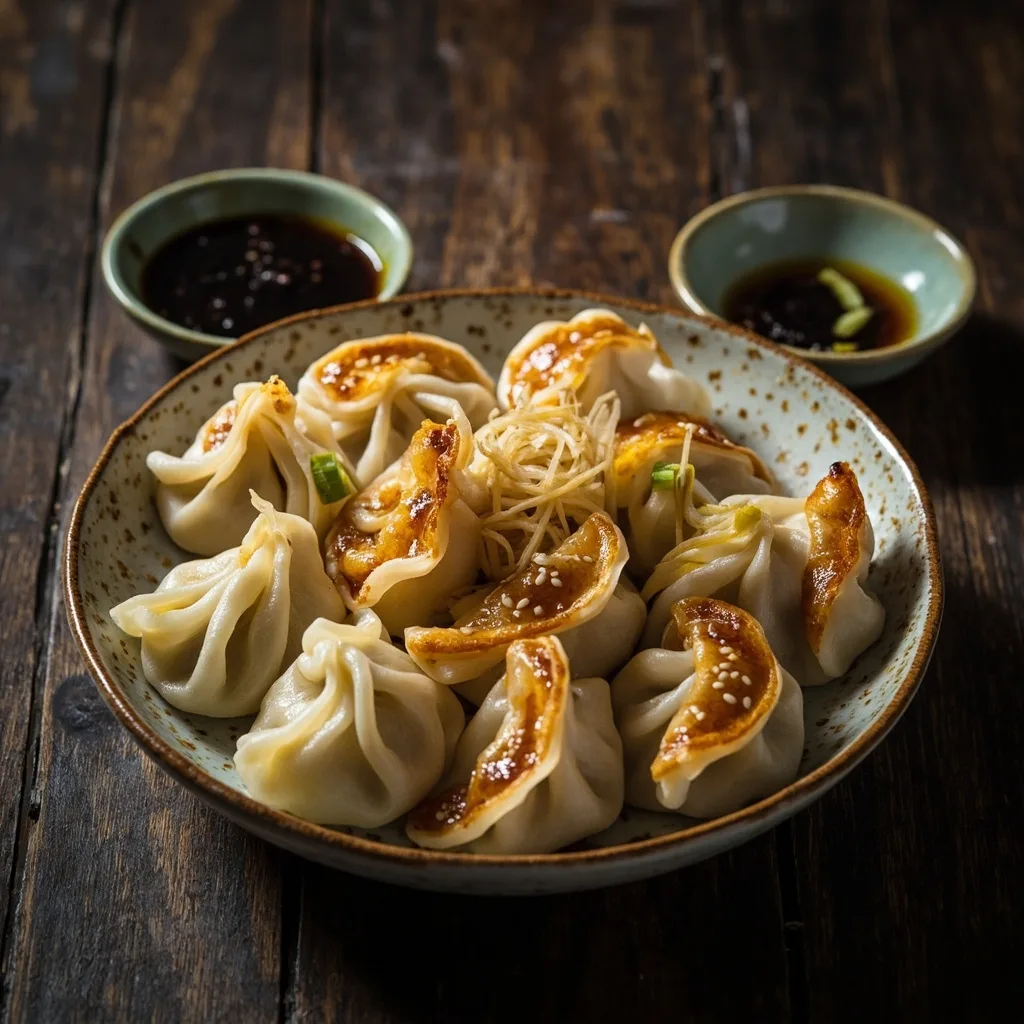
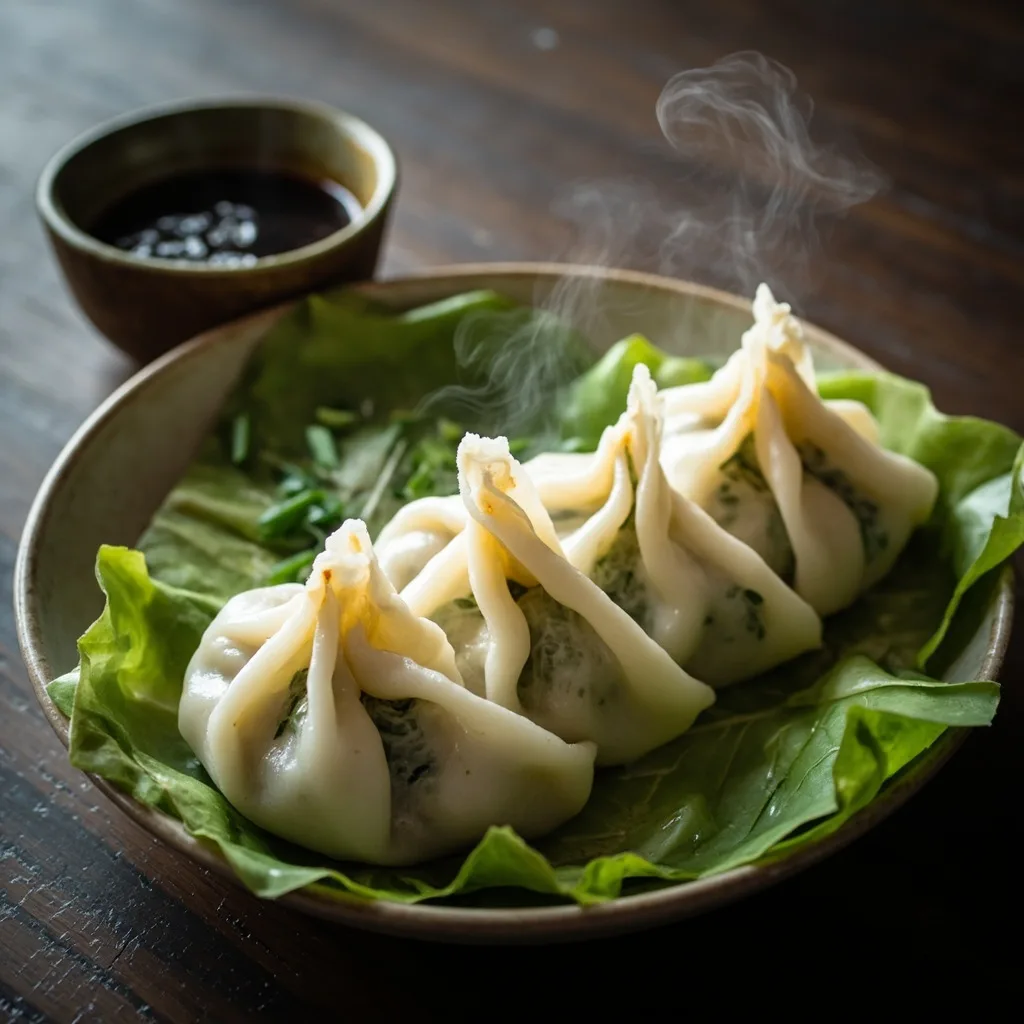
Even when cooked together in one pot, you can still tell them apart by appearance, so the whole family can accurately "locate" their favorite dumplings. Place the dumplings in a pot of boiling water and cook until done; once removed, they can be eaten directly, and they taste wonderful dipped in aromatic vinegar and chili oil.
11
Step 11
Place the dumplings in a pot of boiling water and cook until done; once removed, they can be eaten directly, and they taste wonderful dipped in aromatic vinegar and chili oil.