Simple Version Rice Cakes
A simple method for making homemade rice cakes using glutinous rice cooked in a rice cooker, then shaped, chilled, and pan-fried until golden.
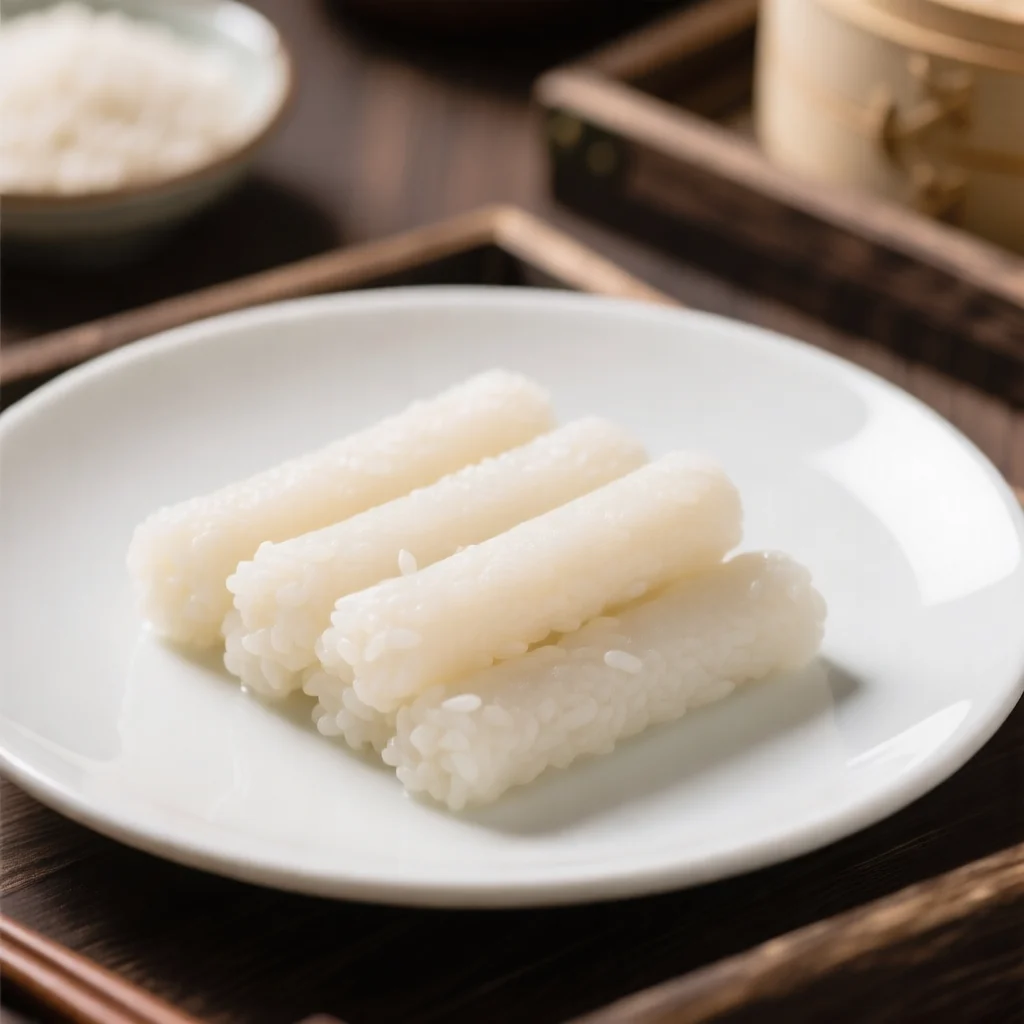
Story
These soft, chewy rice cakes are pan-fried until golden and crisp, then drizzled with fragrant sweet osmanthus syrup for a delightful treat.
Ingredients
Glutinous rice
500g
Oil
to taste
Sweet osmanthus syrup
to taste
Instructions
1
Step 1
Prepare the ingredients.
2
Step 2
Wash the glutinous rice. Since I am using a simple and easy method, cooking directly in a rice cooker, the glutinous rice does not need to be soaked; if using the steaming method, soak the glutinous rice for about 4 hours in advance.
3
Step 3
Put the glutinous rice into the rice cooker, add an appropriate amount of water, and cook it like regular rice. Note: Use a little less water than when cooking normally; I haven't tested the exact ratio of rice to water, but it's about the same as cooking rice normally, but do not cook the rice too soft. I failed the first time because I cooked it too soft, and succeeded the second time by cooking it firmer. If you cannot master the ratio, you can also use the steaming method. However, if the glutinous rice is cooked too soft, it can be remedied, which will be mentioned in the tips later.
4
Step 4
After the glutinous rice is cooked, grind it finely with one end of a clean rolling pin. The picture here is from my first attempt; the rice was too soft, so the final product was not easy to shape. If making niangao (rice cake), you need to grind it until there are no rice grains; if making ciba (glutinous rice cake), it generally tastes better with some rice grains. For niangao, place the glutinous rice on a silicone mat or a clean cutting board and grind it finely with one end of the rolling pin; it is actually quite easy. For ciba, you can put the glutinous rice into a sturdy sealable bag and pound it with the rolling pin.
5
Step 5
Line a fresh-keeping box with plastic wrap. To prevent sticking, spread a little oil on the plastic wrap, then put the semi-finished product in, press it flat, and it won't stick easily if your hands are coated with a little cold water. You can also spread a little oil directly in the fresh-keeping box without using plastic wrap. Place in the refrigerator to set.
6
Step 6
Cut into slices, and it becomes niangao.
7
Step 7
Brush the pan with oil and pan-fry the sliced niangao until both sides are golden yellow. If it is ciba, it will have some rice grains, so cut it into slightly larger pieces; restaurants usually deep-fry it, which is quite greasy, so I suggest just pan-frying it. Whether it is niangao or ciba, you can pan-fry it this way.
8
Step 8
After pan-frying, drizzle with a little sweet osmanthus syrup; it is very fragrant.