
Cranberry Cream Cheese Bread
A soft, fluffy bread loaded with tart cranberries and rich cream cheese swirls, perfect for breakfast, snacks, or casual gatherings.
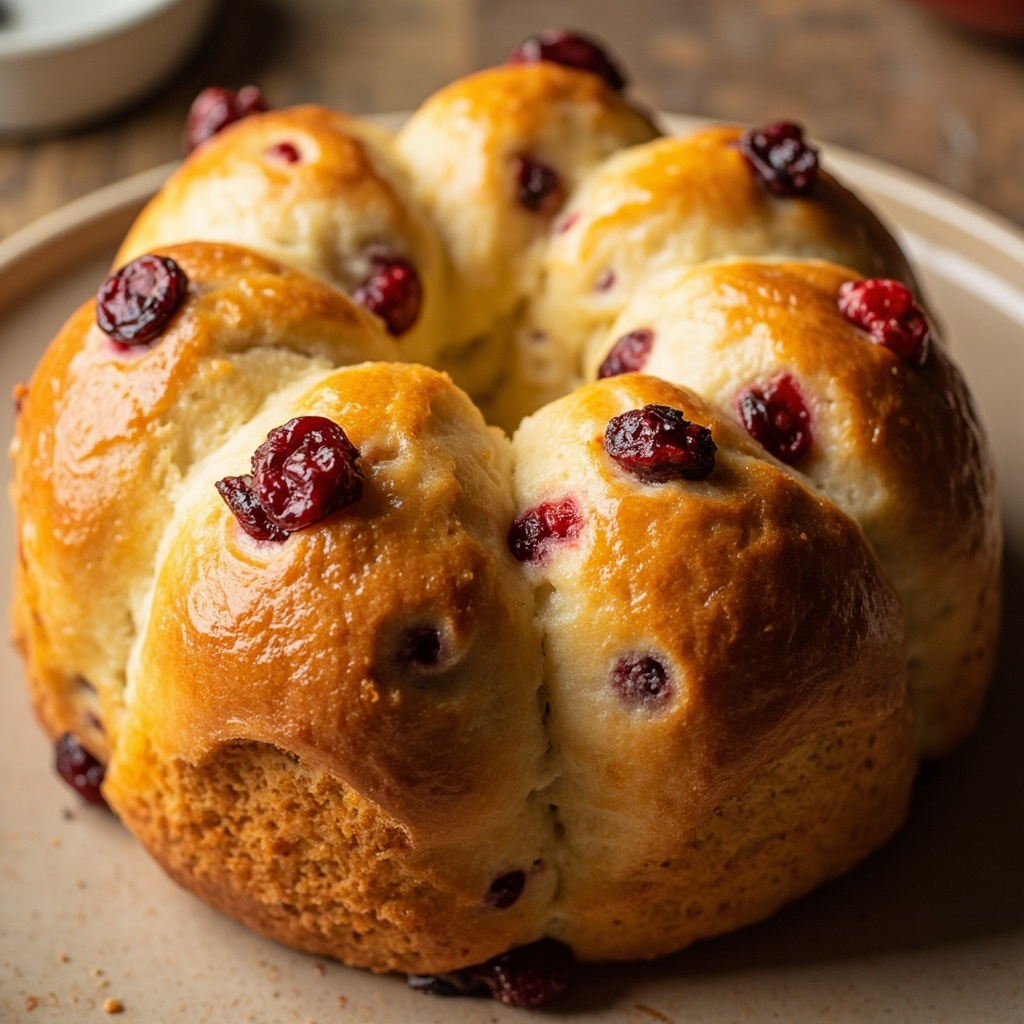
Story
This comforting cranberry cream cheese bread is a beloved staple for home bakers, offering a delightful balance of bright, fruity tartness from the cranberries and the smooth, mild richness of cream cheese in every bite. Its tender, pillowy crumb and lightly golden crust make it a versatile pick for everything from quick weekday morning toast to weekend brunch spreads, and it pairs wonderfully with a warm cup of coffee or tea for a cozy, satisfying treat any time of day.
Ingredients
high-gluten flour
150g
dried cranberries (chopped)
45g
cream cheese
75g
whole egg
45g
whole milk
70g
fine granulated sugar
30g
salt
2g
dry yeast
5ml
Instructions
1
Step 1
Prepare all ingredients.
2
Step 2
Pour the milk and beaten egg into the bread machine, place sugar and salt in opposite corners, add flour, make a small well in the flour, and put in dry yeast.
3
Step 3
Once a dough is formed, add cream cheese. Knead the dough until it reaches the full extension stage, at which point a thin, stretchable film can be pulled from the dough.
4
Step 4
Add dried cranberries to the dough.
5
Step 5
Continue kneading for about 1 minute to fully incorporate the dried cranberries into the dough. Place the kneaded dough in a bowl, cover with plastic wrap or a damp cloth, and let it undergo the first fermentation (proofing).
6
Step 6
Let the dough ferment until it expands to 2 to 2.5 times its original size. To test for doneness, flour your finger and poke it into the dough; if the hole does not shrink or collapse after you remove your finger, fermentation is complete (fermentation time varies with room temperature: the higher the temperature, the faster the fermentation. At a room temperature of 25°C, fermentation takes about 50 minutes).
7
Step 7
Degas the fermented dough by pressing out the air, divide it into 6 equal portions, roll each portion into a ball, cover with plastic wrap or a damp cloth, and let it rest at room temperature for 10 minutes.
8
Step 8
After resting, roll the dough into balls again, place them on a baking tray, and carry out the final proofing. Generally, final proofing requires a temperature of 38°C and humidity of 85%, and takes about 40 minutes.
9
Step 9
After the dough ferments to twice its original size, brush a layer of whole egg liquid over the surface of the dough.
10
Step 10
Place the dough into an oven preheated to 180℃ with both upper and lower heating elements activated, bake for approximately 13 minutes, and remove from the oven once the bread surface turns golden brown.