Quick & Easy Spicy Cabbage (Kimchi)
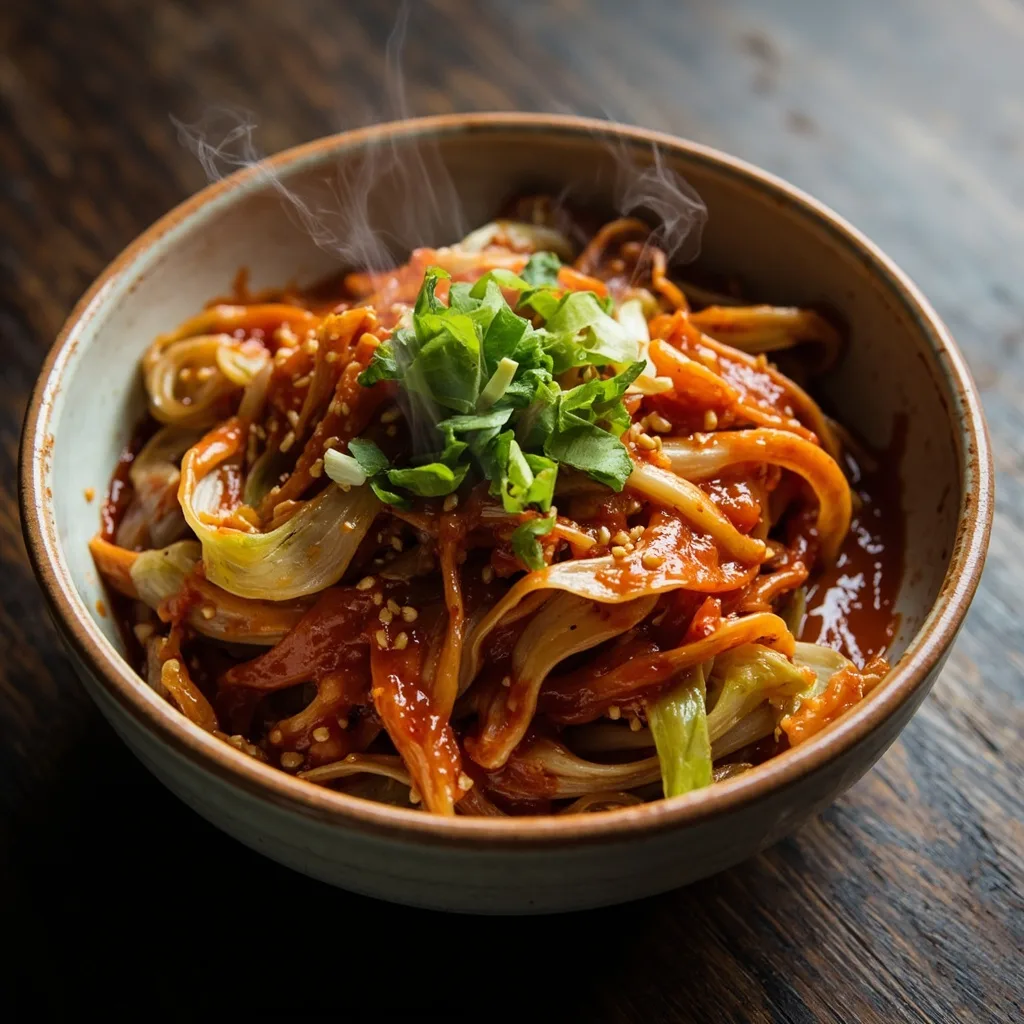
Kimchi is a popular, widely loved side dish: it’s appetizing, cuts through rich or greasy flavors, and pairs perfectly with plain congee, steamed rice, or can be stir-fried with pork belly, beef, and other ingredients. My family adores it, but most store-bought versions are overly sweet and don’t suit our taste. I bought a pre-made kimchi seasoning packet online, and after multiple test batches, I’ve nailed a version with the perfect balance of sweet, sour, and spicy flavor. Since the seasoning comes ready-to-use, this is a semi-homemade recipe! Today I’m sharing all my tested tips and key notes for making it.
Ingredients
Cabbage
1 head
Kimchi seasoning packet
1
Instructions
1
Step 1
Ingredients as shown in the picture. Since this was my first time making it, I chose a smaller cabbage—it's easier to handle and reduces the risk of failure! This seasoning isn't very spicy; it has a mild flavor with a hint of sweetness. Among the many seasoning packets I've tried, this one feels the most suitable for southern palates. Follow the instructions on the package, and at most it will be medium-spicy. One packet of seasoning can make two to three small cabbages!
2
Step 2
Cut it in half (tip: start cutting from the root end, and when you reach the leaves, gently pull them apart—this avoids breaking the leaves into small pieces). Rinse the root end clean, then separate the leaves and sprinkle a small amount of salt between each layer—use a bit more on the stems and less on the leaves.
3
Step 3
Press a heavy object on top. One night is enough to do the job. Alternatively, you can use more salt to draw out the water faster, but you'll need to rinse it more times afterward! Don't cut the cabbage into large pieces—although it draws out water and pickles faster that way, it's harder to control, the crunchiness varies greatly, and the flavor doesn't last as long!
4
Step 4
Once the stems have wilted slightly, rinse them with water! Wash several times until the saltiness is rinsed out. Pinch off a small piece and taste it—when you can taste the natural sweetness of the cabbage, it's ready!
5
Step 5
Squeeze out the excess water—once it's roughly like this, it's good. The cabbage shouldn't be too watery or the seasoning won't penetrate and the flavor will be bland; if it's too dry, it loses the refreshing crunch! My experience is: the inside of the cabbage stems should still be slightly white and tender—when folded, they should be on the verge of breaking but not quite, with the outer edges becoming semi-transparent. The leaves should retain just a bit of moisture. You'll get the hang of this step after a few tries!
6
Step 6
This step is the same as salting—layer the leaves and seasoning, spreading a thin layer evenly!
7
Step 7
Don't be lazy—spread the seasoning evenly between each layer! Be sure to apply extra seasoning to the root ends. For your first time, it's best to follow the proportions on the package; later you can adjust to taste. For a stronger flavor, apply a thicker layer!
8
Step 8
Pack everything in, then cover with a lid to prevent odors from mixing in! Store at temperatures below 20°C (68°F) in a well-ventilated, cool place. Pour off any liquid that accumulates in between. After 24 hours, the leaves will be ready to eat; after 48 hours, the stems will also be ready (at this point, transfer to the refrigerator for cold storage). In my home, the flavor is best at three days—don't keep it longer than a week! It's better to pickle in small batches more frequently!