Soda Crackers
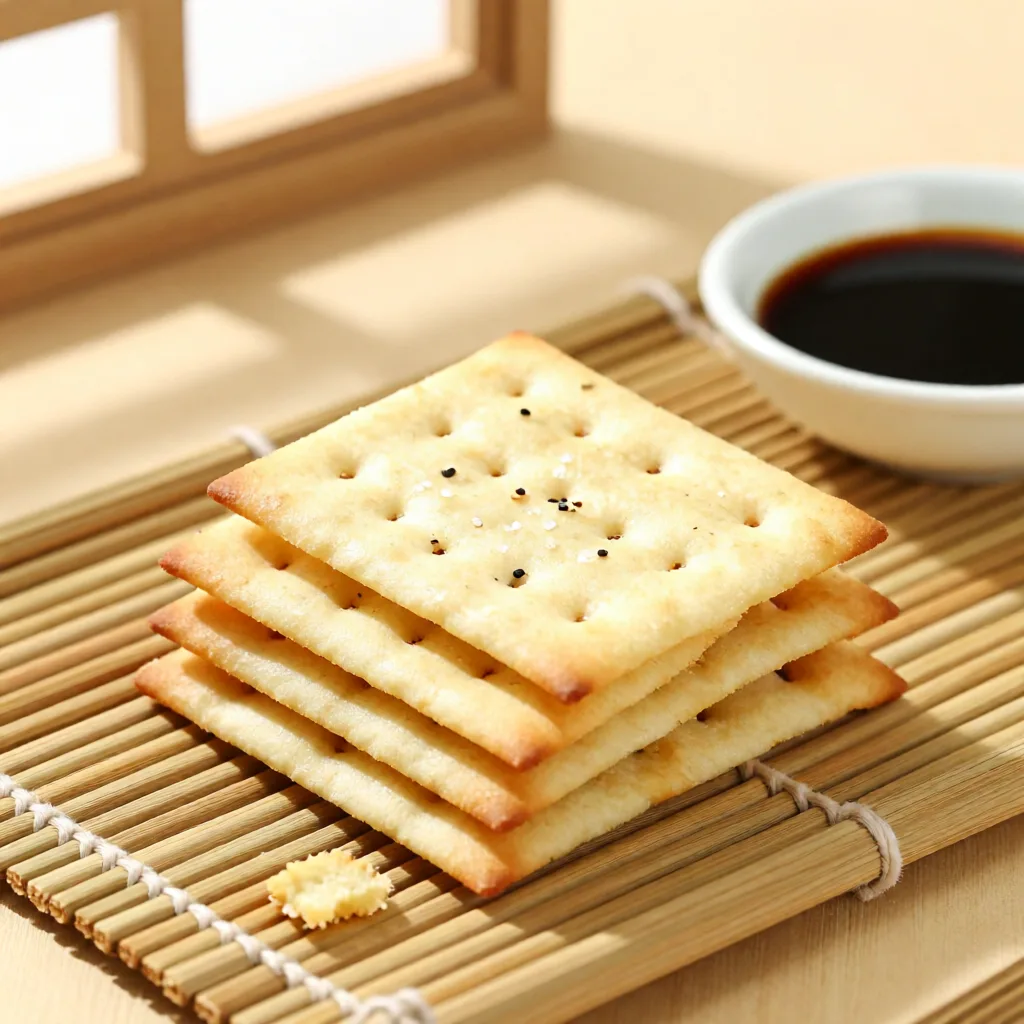
A layered, salted soda cracker prepared using the sponge-dough fermentation method, with two fermentations and rolling.
Ingredients
Sponge flour (based on total flour weight = 100)
60 (US/Japan recipe) / 40-50 (China recipe)
Fresh yeast (US/Japan recipe)
1.359
Yeast (China recipe)
0.5-0.7
Shortening
4.53 (sponge) + 4.53 (main dough)
Yeast nutrient (US/Japan recipe)
0.071
Water (sponge hydration)
about 26 (sponge) / 42-45 (China recipe)
Main dough wheat flour (US/Japan recipe main dough)
40
Sugar or maltose (US/Japan recipe main dough)
0.65
Salt (not added to sponge, added to main dough)
1.36 (sponge + main dough) / 1.8-2% (total)
Sodium bicarbonate (baking soda) (US/Japan recipe main dough, bring pH to 7.1 or slightly higher)
0.54
Instructions
1
Mixing the sponge dough
Mix the sponge ingredients (flour, water, shortening, yeast, etc.) until evenly combined. Stir for 4-5 minutes to blend the ingredients evenly, but do not over-mix. Keep dough temperature around 28°C.
2
Sponge fermentation
Place in the fermentation room. Ideal fermentation temperature is 27°C with 75% relative humidity. Fermentation time is 6-10 hours (China recipe) or 18-30 hours (US/Japan recipe). When complete, the pH is around 4.5-5. The yeast multiplies fully, and wild fermentation metabolites dissolve and denature the gluten; the tension and relaxation of fermentation gases change the gluten properties.
3
Mixing the main dough
Once sponge fermentation is complete, add the remaining flour, fat, and other ingredients (except baking powder). Gradually sprinkle in the baking soda once mixing starts to bring the dough pH to 7.1 or slightly higher. Mixing time is about 5 minutes; the dough should be soft and easy to tear.
4
Second fermentation
Cover the main dough with a damp cloth and let it rest for 2-4 hours for continued fermentation.
5
Rolling and laminating
Pass the dough through 5-8 cycles of rolling from thick to thin, then folding and rolling thin again, to organize the gluten into a regular layered structure. Before enclosing the fat layer, the rolling ratio should not exceed 1:3; after enclosing the fat, the rolling ratio is 1:2 to 1:2.5.
6
Shaping and baking
Stamp or cut into shapes and bake. The finished product has a layered, crispy structure.